Pakistan Plans LPG Deregulation Amid Supply Concerns
Pakistan plans to deregulate the liquefied petroleum gas market while protecting vulnerable households, aiming to secure imports, improve availability and address pricing distortions ahead of winter.
Pakistan is preparing a major overhaul of its liquefied petroleum gas (LPG) sector, proposing complete deregulation to strengthen supplies and address persistent pricing distortions. The proposed reforms aim to attract investment, improve competition and secure imported supplies amid declining domestic natural gas production. The government also intends to protect vulnerable sections of society during the transition.
Read More: Hormuz crisis disrupts India LPG market
More than 10 million households in Pakistan are connected to the piped natural gas (PNG) network. However, over 25 million households rely on alternative fuels, including LPG. These households are particularly concentrated in remote areas and localities without pipeline connections.
LPG demand has increased alongside population growth and declining domestic natural gas production. The country’s LPG market currently stands at approximately 2.4 million metric tons (MMT) annually. According to analysis undertaken by KPMG, the market recorded compound annual growth of 7.5% over six years. Annual demand growth is projected at 8.0% to 8.5% in coming years.
KPMG estimates that LPG demand will increase from 2.4 MMT in FY2025-26. It projects consumption reaching 4.16 MMT by FY2032-33. Domestic production, however, is expected to increase much more slowly. Output is projected to rise from 0.96 MMT to only 1.35 MMT. Consequently, imports will become increasingly important for meeting national requirements. Imported volumes are expected to increase from 1.4 MMT to 2.8 MMT by 2033.
The government has maintained a moratorium on expanding the pipeline network since December 2021. This decision reflects declining domestic natural gas production. LPG has consequently emerged as the only viable environmentally friendly alternative fuel. Diverting expensive imported LNG and RLNG towards domestic consumers would involve substantial subsidies. It would also create additional payment challenges.
The current geopolitical situation has further exposed vulnerabilities in Pakistan’s energy supply chain. The government has warned that disruptions could threaten LPG availability. These concerns have increased pressure for reforms ahead of winter. Limited PNG supplies could intensify household energy shortages if LPG imports become constrained.
Pakistan obtains LPG through three principal supply channels. Local refineries contribute approximately 9% of total supplies. Domestic exploration and production companies provide another 20%. Imports account for the remaining 71% of the market.
Imported LPG enters through both maritime and land routes. Sea imports represent approximately 16% of total supplies. These shipments arrive through two terminals at Port Qasim. Land imports account for approximately 55% of the overall supply. Major land crossings include Taftan and Gabd-Ramden.
The heavy reliance on land imports creates significant supply-chain and regulatory challenges. These include product quality concerns, inadequate inspection facilities and safety risks. Pakistan currently has no testing facilities at its land entry points. OGRA and HDIP inspections at Taftan have also identified substandard products.
Decanting activities at border crossings have created serious safety concerns. These operations take place without adequate safety infrastructure. Numerous explosions have occurred since 2020, causing more than 60 fatalities. An estimated 56% of LPG bowsers also operate without licences.
Undocumented LPG volumes create additional problems for government revenue collection. Informal supplies escape sales tax, petroleum levy and customs duties. Documented imports are subject to these applicable charges. However, authorities have been unable to accurately measure informal LPG inflows. The Inter-Ministerial Committee on Illegal LPG Cylinders highlighted these concerns in June 2026.
Pakistan’s existing LPG infrastructure is also insufficient for growing demand. The country has approximately 70,000 metric tons of cumulative storage capacity. Around 14,000 metric tons are located at seaports. Inland facilities account for approximately 56,000 metric tons. The distribution network includes nearly 2,600 LPG bowsers. Approximately five million LPG cylinders are currently in circulation.
The government originally decided to deregulate the LPG industry in June 2000. The initiative sought to attract investment and encourage healthy competition. It also aimed to improve safety standards and strengthen product availability.
Subsequently, the government introduced LPG production and distribution policies in 2006, 2011 and 2013. These policies sought to increase supplies through domestic production and imports. However, the industry continued facing demand-supply imbalances and cartelisation. Litigation and price distortions also remained persistent challenges.
Despite being commonly described as poor man’s fuel, LPG remains expensive. Its domestic consumer price exceeds natural gas prices by more than 20 times. Limited supplies and persistent pricing problems have undermined affordability. Earlier government initiatives have failed to resolve these structural challenges.
The Federal Government introduced the LPG Production and Distribution Policy, 2016, to address these problems. Section 21 of the Oil and Gas Regulatory Authority Ordinance, 2002, empowers the government to issue pricing guidelines to OGRA.
Under Clause 3.4.1 of the 2016 policy, OGRA notifies producer prices. It also determines marketing margins and consumer prices for indigenous LPG. Clause 3.4.5 establishes maximum prices across the entire supply chain. These provisions were intended to protect consumers against excessive pricing.
However, the existing pricing mechanism has created significant market distortions. Since February 2018, OGRA has issued monthly LPG prices under guidelines. These guidelines were developed by the LPG Pricing Committee. The formula uses Saudi Aramco’s Contract Price (CP) on an FOB basis. It also incorporates a fixed margin of Rs 35,000 per metric ton.
In June 2023, OGRA extended the indigenous LPG pricing formula to imported supplies. However, the notified price does not adequately account for import-related expenses. These include premiums over Saudi Aramco’s contract price and freight charges. Insurance, port handling, terminal charges and other incidental expenses are also excluded.
Consequently, formal imports have become commercially unattractive under the existing mechanism. Importers cannot sustainably sell imported LPG at notified prices. The resulting regulatory disconnect has weakened the effectiveness of price controls.
The fixed marketing margin has also remained unchanged since 2018. During this period, diesel prices reportedly increased approximately 205%. The Pakistani rupee depreciated by around 155% over the same period. These changes have substantially increased operating costs across the sector.
Market prices have consequently moved considerably above OGRA’s notified ceiling. The provided figures state that average filling-plant rates during January-July 2026 ran Rs 60-79 per kilogram above the OGRA consumer price. The reported premium peaked at Rs 158 per kilogram in March 2026. This represented a premium of approximately 11% to 70% above the notified ceiling. The precise average-rate figure requires verification.
Companies selling at officially notified prices face competitive disadvantages. Their higher-cost imported supplies make compliance commercially difficult. Meanwhile, companies operating outside the notified pricing mechanism gain market share. Long-term agreements between producers and established buyers further restrict supplies. Consequently, legitimate companies struggle to secure sufficient LPG volumes.
The government has also acknowledged that consumers are effectively paying import-reflective prices. However, they are not receiving meaningful protection from existing price regulation. This situation has raised concerns about unfair profiteering. It has also weakened confidence in the current pricing framework.
Import infrastructure represents another major constraint on future market expansion. Pakistan currently has two LPG terminals at Port Qasim. Each terminal has approximately 6,500 metric tons of storage capacity. Both terminals can receive vessels with capacities not exceeding 10,000 deadweight tons.
International standards generally involve vessels carrying 30,000 to 50,000 deadweight tons. Pakistan’s existing facilities therefore restrict access to larger shipments. The country also lacks refrigerated storage infrastructure. There are no inter-terminal pipelines connecting the existing facilities.
These limitations have restricted maritime imports to approximately 16% of total supplies. Meeting projected demand through FY2035-36 will require substantial infrastructure investment. Additional terminals, storage facilities and cylinders will be necessary. The country will also need greater filling and transportation capacity. Estimated investment requirements stand at approximately US$1 billion. This investment is expected over the next three to five years.
Regulatory enforcement remains another major weakness across the industry. Pakistan currently has 464 licensed LPG marketing companies. No individual company holds more than 9% market share. This fragmented structure complicates oversight and effective enforcement.
State-owned marketers also maintain relatively limited market participation. PSO Pak Gas and SSGC LPG Limited collectively hold approximately 5.4% market share. SNGPL is also establishing its own LPG subsidiary.
Licensing requirements have contributed to fragmentation within the sector. Licences have been issued without adequate investment thresholds or performance conditions. Regular performance audits have also remained absent. Consolidation proposed under the 2021 draft policy was never implemented.
Quality testing at land borders remains unavailable. Unsafe cross-filling of branded LPG cylinders also continues openly. Existing legal provisions provide limited deterrence against unlicensed operators. Sections 285 and 286 of the Pakistan Penal Code address relevant offences. However, these provisions carry maximum fines of only Rs 3,000. They also prescribe up to six months of bailable imprisonment.
Enforcement of notified consumer prices remains equally challenging. OGRA lacks the necessary resources to monitor the entire market. The regulator also depends on provincial governments for enforcement support. Consequently, maximum price notifications are not effectively enforced across open markets.
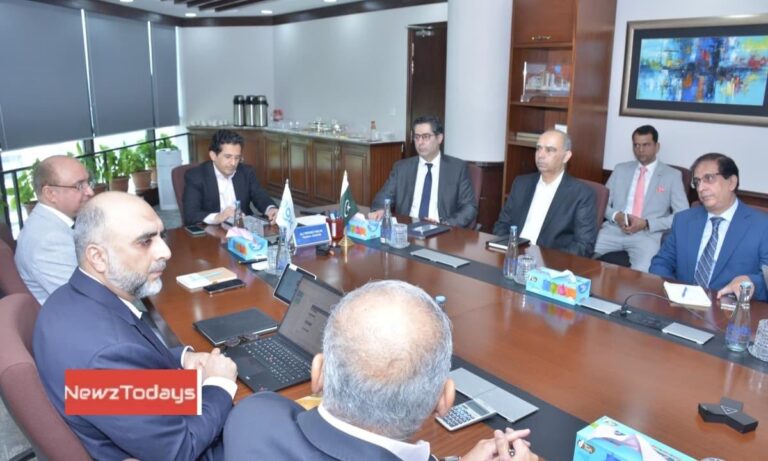
Against this backdrop, the Ministry of Energy’s Petroleum Division initiated consultations. Discussions involved OGRA, exploration and production companies and Sui companies. PSO, SSGC LPG Limited and registered LPG trade organisations also participated. These consultations aimed to develop proposals for opening the sector. The broader objective was increasing supplies through transparent and competitive market arrangements.
The proposed reforms are intended to guide OGRA’s regulatory implementation. Their legal basis includes Section 21 of the OGRA Ordinance, 2002. They also refer to Rule 18 of the LPG Rules, 2001. Relevant provisions include Paragraphs 3.4.1 and 3.4.5 of the 2016 LPG policy.
Following stakeholder consultations, Petroleum Division prepared an initial proposal. A summary dated September 30, 2026, was initiated for the Cabinet Committee on Energy (CCoE). It proposed adopting import parity pricing for a single national LPG price.
The proposal sought to change the existing pricing benchmark. Instead of Saudi Aramco’s FOB contract price, it proposed landed import parity costs. These costs would be based on imports undertaken by PSO and SSGC LPG Limited. Both companies are state-owned and OGRA-licensed marketers. The proposed approach would follow the benchmark mechanism used by PSO for diesel pricing.
However, the CCoE had not considered the summary at that stage. Petroleum Division subsequently presented broader policy proposals to the Prime Minister. Following initial discussions, further consultations were directed. The Ministry was asked to refine its proposal with the Minister for Economic Affairs Division. The National Coordinator of the National Crisis Management Cell was also included.
Multiple meetings subsequently examined the proposed policy framework. Discussions resulted in a shift away from partial deregulation. Instead, Petroleum Division was directed to accelerate complete deregulation. Protection for vulnerable sections of society was identified as an essential requirement.
The revised proposal was presented to the Prime Minister on October 23, 2026. Following deliberations, the revised proposals received in-principle approval. The Prime Minister directed Petroleum Division to submit a revised summary. Formal approval is now being sought through the updated submission.
The revised summary also includes proposed guidelines for LPG pricing. Petroleum Division has emphasised the importance of uninterrupted imported supplies. Regional geopolitical tensions have increased concerns about energy security. The government considers seamless LPG imports essential for protecting domestic consumers.
Winter shortages could become particularly challenging for households relying on LPG. Limited PNG availability would further increase dependence on alternative fuels. Any disruption in LPG supplies could create substantial social distress. The government has also warned of potential public unrest. Ensuring sufficient imports has therefore become an immediate policy priority.
The proposed deregulation marks a significant shift in Pakistan’s LPG policy direction. Its success will depend on implementation and effective consumer protection. Investment in terminals, storage and distribution infrastructure remains essential. Stronger quality controls and safety enforcement will also be necessary. Pakistan’s LPG market will increasingly influence household energy security. Its regulatory framework must balance competition, affordability and uninterrupted supplies.