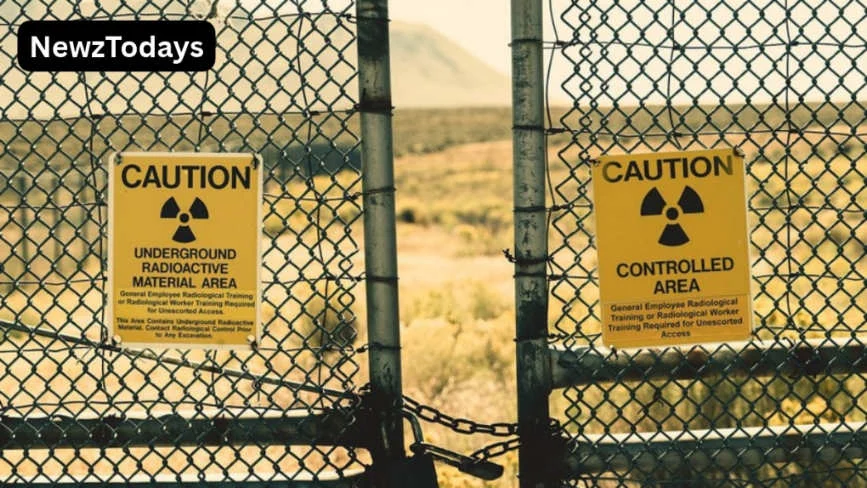
US Struggles to Store $50 Billion Nuclear Waste Fund
The United States faces a growing challenge in managing its nuclear waste despite possessing a $50 billion fund allocated for this purpose. With nuclear spent fuel accumulating rapidly across the country, the lack of a permanent disposal site has triggered both environmental and fiscal concerns.
Finland’s Onkalo: A Model for Nuclear Waste Disposal
While the US grapples with its nuclear waste dilemma, Finland is on the verge of launching the world’s first permanent underground nuclear waste repository. The Onkalo facility, situated 400 meters beneath bedrock, is designed to safely contain up to 6,500 tonnes of spent nuclear fuel encapsulated in copper canisters. This repository will securely store radioactive material for up to 100,000 years, effectively preventing environmental contamination and aiding long-term management.
Construction on Onkalo began over two decades ago, and the facility recently received its official operating license. A key factor in Finland’s success has been political stability and consistent commitment across decades, even through changes in government, ensuring continuous progress on nuclear waste management.
US Nuclear Waste Status and Political Gridlock
In sharp contrast, the US holds approximately 97,000 metric tons of spent nuclear fuel stored at almost 75 sites in more than 30 states. The country’s sole legislated repository, Yucca Mountain in Nevada, has seen no development funding for over 15 years, stalled by persistent political disagreements and regulatory hurdles. The Nuclear Waste Fund, built from fees paid by nuclear energy producers, contains over $50 billion but remains inaccessible without Congressional approval.
An op-ed in the Washington Post highlighted that, unlike Finland’s steady approach, the US nuclear waste policy suffers from shifting administrative priorities and stalled legislation. This has left nuclear waste stored in temporary facilities, posing unresolved safety and environmental risks.
Implications for Pakistan and Global Energy Strategies
For Pakistan, a country advancing its nuclear energy capabilities to meet growing electricity demands, the US and Finland examples highlight the complex challenge of radioactive waste disposal. Effective long-term solutions are critical to ensuring safety and public confidence in nuclear power. Without a clear strategy, accumulating waste could become a substantial public health hazard and economic burden for any nation expanding its nuclear sector.
Pakistan’s policymakers and energy planners may benefit from observing global best practices like Finland’s comprehensive, long-term approach. Meanwhile, the US situation serves as a cautionary tale on the risks of political indecision in nuclear waste governance.
As stated in the Washington Post, Finland’s model showcases “a remarkable feat of engineering and political achievement,” underscoring the importance of sustained commitment beyond electoral cycles in addressing nuclear waste challenges.