
MIT APT Revolutionized Manufacturing Code
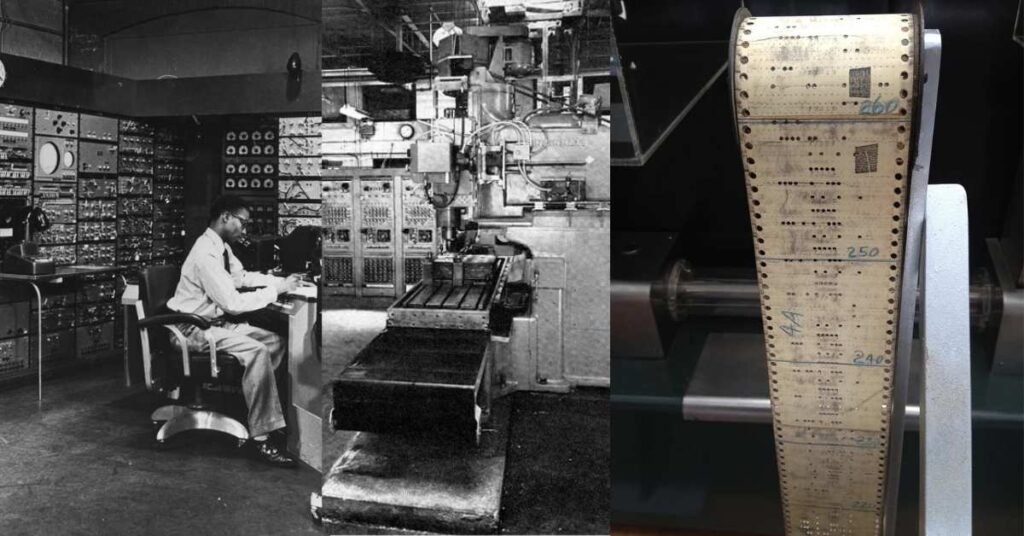
MIT’s APT language transformed factory automation, laying the foundation for modern CAM software, industrial robotics, and AI-driven manufacturing systems.
When researchers at Massachusetts Institute of Technology demonstrated the Automatically Programmed Tool language in the 1950s, they reshaped global manufacturing.
The system, known as APT, replaced tedious manual calculations with high-level coded instructions. It allowed engineers to describe machining operations in English-like commands. Machines translated those commands into precise numerical tool movements.
Before APT, numerically controlled machines demanded painstaking coordinate calculations. Engineers manually computed every feed rate and tool path. Programming errors were frequent and costly. Production complexity remained limited by mathematical workload and human endurance.
Read More: Claude AI Helped US Capture Maduro: Report
APT changed that model decisively. It separated human intent from machine mathematics. Programmers specified shapes, contours, and drilling operations. The software converted those instructions into exact motion commands. Intricate geometries became practical on industrial scales.
According to historical archives from MIT’s Servomechanisms Laboratory, APT development began in 1956. The U.S. Air Force funded early research to support aerospace machining needs. Complex aircraft components required precision beyond manual drafting methods. APT offered scalable automation at a critical industrial moment.
By the early 1960s, APT had spread across major manufacturing firms. Aerospace leaders and automotive suppliers adopted the system. The language influenced emerging numerical control standards globally. It became the backbone of early computer-aided manufacturing workflows.
The conceptual breakthrough was abstraction. Engineers no longer needed to understand every trigonometric computation. They defined the objective, not each intermediate coordinate. That logic later shaped nearly every CAM platform in use today.
Modern systems such as Autodesk Fusion 360, CATIA, and Siemens NX operate on the same foundation. Users define geometry and tool strategy. The software automatically generates G-code. That G-code directs CNC machines with micrometer precision.
Global manufacturing increasingly depends on these systems. According to data from industry analysts at MarketsandMarkets [verify], the global CAM software market exceeded $3 bn in 2024. Growth reflects rising demand for precision engineering and automated production. Much of that demand traces back to principles APT introduced.
APT’s legacy extends into industrial robotics. Today’s robotic programming platforms allow operators to define motion paths abstractly. The system converts high-level instructions into joint angles and torque commands. This mirrors APT’s original translation model.
Industrial robot installations worldwide reached record levels in 2023, according to the International Federation of Robotics [verify]. Automotive and electronics sectors lead adoption. Robots now perform welding, machining, and inspection tasks once handled manually. Each deployment relies on layered abstraction between human instruction and mechanical execution.
Artificial intelligence now builds upon that foundation. Machine learning systems optimize tool paths in real time. Predictive maintenance algorithms anticipate tool wear before failure. Vision systems detect manufacturing defects automatically. Yet these systems operate within APT’s original conceptual architecture.
The difference lies in scale and autonomy. Early APT programs followed deterministic logic. Modern AI models analyze massive datasets. They adapt to new variables and refine output continuously. However, both approaches translate intent into executable machine action.
Manufacturing economists note that abstraction reduces training barriers. Engineers focus on design and strategy. Software handles computational intensity. This model enables complexity at industrial scale.
The broader macroeconomic impact has been substantial. Advanced manufacturing contributes roughly 17% of global GDP, according to World Bank industrial data [verify]. Productivity gains increasingly depend on digital automation. CAM software and robotics form the operational backbone of that shift.
Policy frameworks also encourage digital manufacturing. Governments in the United States, Germany, and China promote Industry 4.0 initiatives. These programs integrate automation, data exchange, and intelligent systems. The intellectual lineage from APT to Industry 4.0 remains clear.
Over seven decades, computational power expanded exponentially. Algorithms grew more sophisticated. Interfaces became visual and intuitive. Cloud computing now enables distributed manufacturing workflows. Yet the core pattern established at MIT endures.
APT demonstrated that manufacturing complexity could be abstracted. It proved that engineers need not compute every mechanical detail. That insight unlocked scalable automation. Every modern CAM suite and AI-driven production tool reflects that principle.
As factories adopt generative AI and autonomous optimization, the underlying philosophy remains unchanged. Human intent defines the objective. Software determines the path. From punched tape to machine learning models, the thread remains unbroken.
The evolution from APT to AI-driven automation shows continuity rather than disruption. Manufacturing’s digital future still rests on the abstraction breakthrough pioneered at the Massachusetts Institute of Technology.