

NEPRA weighs net billing shift for rooftop solar
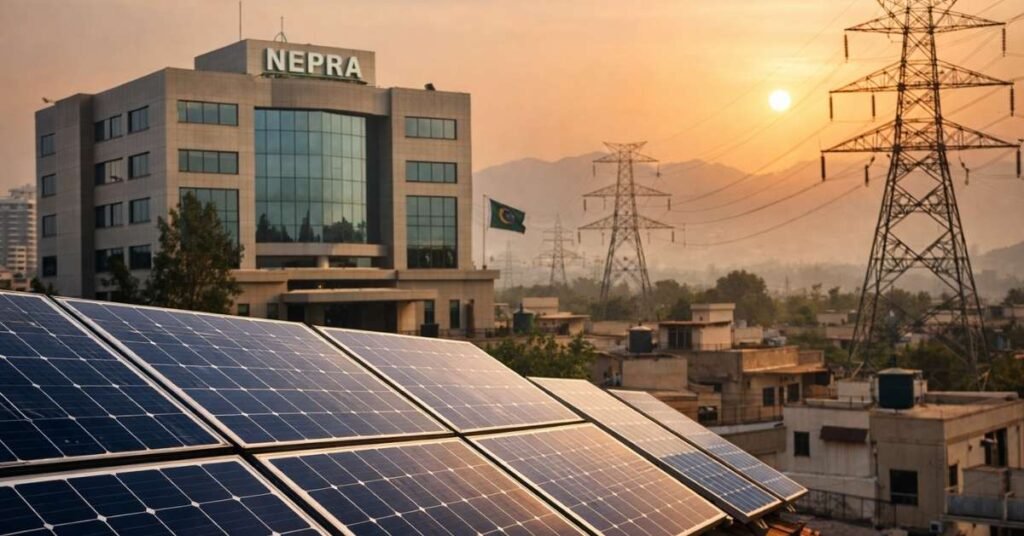
The national electric power regulatory authority (Nepra) is set to tighten nose around the consumers of solar net metering after it plans to shift from net metering to net billing. Power division had faced a political backlash after it wanted to amend solar net metering policy.
Pakistan’s power regulator will hold a public hearing on Friday to consider replacing solar net metering with net billing, shifting a politically sensitive decision from the government to the regulator.
The hearing will examine objections and endorsements to the Draft Prosumer Regulations 2025, published on December 16, as part of broader efforts to reshape Pakistan’s renewable energy framework under the oversight of National Electric Power Regulatory Authority.
The move follows two earlier attempts by the Power Division to revise the solar net metering policy, both of which were withdrawn after strong resistance from consumers, solar companies, and industry groups. By routing the decision through the regulator, policymakers appear to be seeking insulation from political backlash amid rising electricity costs and widening debates over fairness in the power sector.
Net metering currently allows solar prosumers to offset their electricity consumption by exporting surplus power to the grid at the same tariff they pay for imported electricity. This mechanism has helped drive rapid rooftop solar adoption across urban Pakistan, particularly among commercial and industrial users seeking relief from high grid tariffs.
Under the proposed shift to net billing, surplus electricity exported to the grid would be credited at a lower rate, closer to the utility’s avoided cost rather than the full retail tariff. Regulators and supporters argue this approach better reflects actual system economics and prevents non-solar consumers from subsidising rooftop solar users.
The Draft Prosumer Regulations 2025 outline new rules for integrating distributed generation facilities, including solar, wind, and biogas, into the national grid. They define the responsibilities of prosumers, distribution companies, and the regulator, covering application procedures, interconnection standards, metering requirements, and billing mechanisms.
According to the draft, the objective is to establish a fair and technically sound framework that ensures grid safety, financial sustainability, and effective integration of small-scale renewable energy while protecting the broader consumer base. The regulations also propose reducing the standard prosumer contract duration from seven years to five, a change that has drawn particular criticism.
Support for the proposed shift has come from several institutional stakeholders concerned about grid stability and mounting financial pressures on distribution companies. The Private Power and Infrastructure Board described the move from net metering to net billing as a progressive step toward a more balanced and transparent framework for distributed energy resources.
PPIB said the changes offer a reasonable compromise between encouraging renewable energy investment and safeguarding the interests of non-solar consumers, who currently bear part of the cost of higher buy-back rates through increased tariffs and cross-subsidies.
Germany’s development agency GIZ, which is advising the regulator on the revisions, also endorsed the draft regulations. GIZ said the framework promotes smart grid solutions, digitalisation, and improved operational efficiency, while supporting Pakistan’s climate commitments and long-term energy transition goals.
Proponents argue that gradual integration of rooftop solar with stricter export controls is necessary to avoid technical challenges, including reverse power flows and localised grid congestion. They maintain that net billing encourages prosumers to consume more of their own generation, reducing stress on the grid and aligning incentives with system needs.
Read More: Discos seek fixed charges on solar net metering
However, opposition from the solar industry and business community has been vocal, focusing on the financial impact on existing and prospective prosumers. Siddiq Renewable Energy (Pvt) Ltd., a major solar developer, warned that lower buy-back rates could make rooftop solar investments economically unattractive, particularly for small and medium users.
The company said longer payback periods and reduced returns would slow solar adoption, discourage private investment, and undermine momentum in a sector that has expanded rapidly as households and businesses sought protection from volatile grid tariffs.
Business groups have echoed these concerns. The Karachi Chamber of Commerce & Industry argued that net billing would create an unfair disparity between export rates and retail electricity prices. It said prosumers would be forced to sell surplus solar power cheaply while buying grid electricity at significantly higher tariffs, effectively imposing what it described as a “solar tax” on clean energy adopters.
Stakeholders are particularly concerned that shorter contract durations, combined with reduced export compensation, will erode investor confidence. Many argue that rooftop solar projects rely on predictable, long-term cash flows to recover upfront costs, and frequent policy shifts increase regulatory risk.
The Power Division has defended the draft regulations as part of a broader push for equity in the power sector, arguing that unchecked growth in net metering has encouraged rent-seeking behaviour and shifted costs onto grid-dependent consumers. Officials maintain that reforms are necessary to ensure that efficiency gains from solar adoption do not come at the expense of system viability.
Pakistan’s renewable energy landscape has evolved rapidly over the past decade, driven by high electricity prices, supply constraints, and policy incentives. Rooftop solar installations have surged, particularly since 2022, altering consumption patterns and raising new regulatory challenges for utilities.
As National Electric Power Regulatory Authority moves toward finalising the Prosumer Regulations 2025, the outcome of Friday’s hearing will be closely watched. The decision will shape the balance between grid stability, energy affordability, and future solar investment, determining how Pakistan manages its transition toward a more decentralised power system.