Soft mountain rock erodes three times faster than hard rock
A new study conducted by researchers at the University of Massachusetts Amherst has discovered that soft mountain rock erodes at a rate three times faster than hard rock. This finding is prompting scientists to rethink current models of natural carbon dioxide emissions from mountainous regions.
Advancing Geological Measurements
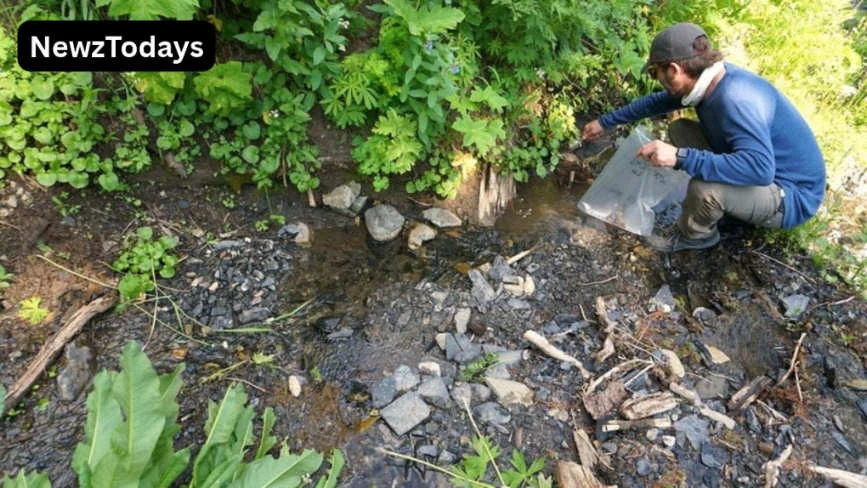
The researchers employed an innovative method to measure erosion rates in fine-grained sedimentary rocks, such as shale, which were previously difficult to analyze due to their small grain size. By isolating the rare isotope beryllium-10 in quartz crystals found in sediments, they were able to accurately track erosion processes over time.
This isotope forms when cosmic rays strike the Earth’s surface, enabling geologists to estimate how quickly rocks wear down. Earlier, measurements were limited to large granite grains, restricting understanding of softer rock breakdown. The new technique tested samples from a varied alpine watershed in Colorado, including areas around Crested Butte, known for its mix of both resilient igneous rocks and fragile shale formations.
Implications for Climate Modeling
The findings reveal that shale erodes rapidly even on gentle slopes, whereas harder rocks break down much more slowly. This suggests that the most significant landscape changes and associated carbon emissions originate from the softest, lowest mountain zones, not steep rocky summits as previously assumed.
Since hard igneous rocks tend to absorb carbon dioxide over time, while erosion of sedimentary rocks releases greenhouse gases stored within, scientists have likely underestimated the natural carbon footprint of mountainous areas worldwide. Incorporating these results into global climate models could refine predictions of natural emissions and enhance understanding of how mountain landscapes influence climate change.
Why It Matters for Pakistan
Mountain erosion and its impact on carbon cycling is particularly significant for Pakistan, which is home to a vast portion of the Himalayas and other mountain ranges. Accurately assessing how these landscapes contribute to greenhouse gas flux is vital for national climate strategies and environmental management. Enhanced knowledge about erosion rates can aid policymakers in developing better conservation and climate adaptation measures tailored to Pakistan’s unique geophysical environment.
As the country grapples with the effects of climate change, including glacial melt and changing hydrological patterns, understanding the geological processes that affect carbon emissions from mountain regions becomes increasingly crucial.
According to postdoctoral researcher Eyal Marder, “Our study highlights how fragile mountain rocks can significantly influence greenhouse gas emissions, a factor that has been overlooked in conventional models.” This breakthrough unlocks new opportunities for geoscientists to revisit assumptions about natural carbon cycles in mountainous terrain globally.