
When Will Pakistan Resume LNG Imports from Qatar?
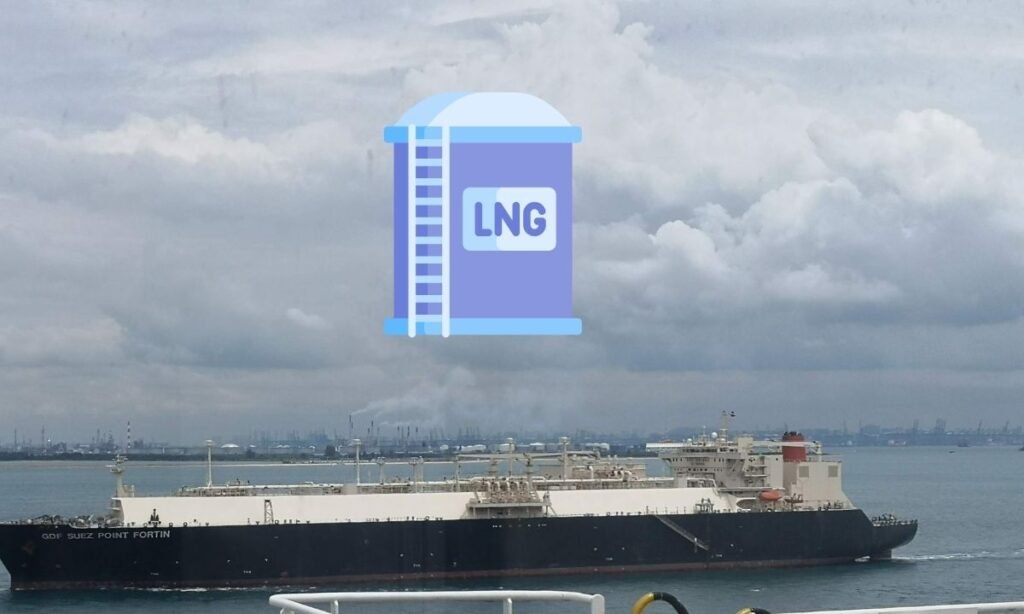
Pakistan may take weeks or even months to restore LNG supplies from Qatar after QatarEnergy declared force majeure on exports following disruptions at its Ras Laffan facilities amid escalating conflict in the Gulf region.
Pakistan could face prolonged gas supply disruptions after QatarEnergy declared force majeure on liquefied natural gas exports following a halt of shipping through the Strait of Hormuz caused by escalating Middle East tensions.
Read More: LNG Surplus Puts Petroleum Division Under Strain
Pakistan relies heavily on imported LNG to meet domestic gas demand, bringing around nine cargoes every month under long-term contracts and spot purchases. Any prolonged disruption in Qatari exports could therefore significantly strain the country’s energy supply chain.
According to report, QatarEnergy announced the force majeure after operations at its Ras Laffan Industrial City were disrupted when shipping through the Strait of Hormuz effectively stopped during the ongoing U.S.-Israeli conflict with Iran. The declaration releases the state-owned company from contractual obligations due to extraordinary circumstances beyond its control.
Qatar is the world’s largest LNG exporter and accounts for about 20% of global LNG trade. Its shipments primarily supply Asian markets including China, Japan, India and South Korea, along with European buyers seeking alternatives to Russian gas supplies.
The shutdown of LNG exports from Qatar could therefore create serious supply challenges for importing countries, including Pakistan, which has increasingly relied on LNG imports over the past decade to offset declining domestic gas production.
Pakistan had earlier reached an agreement with Qatar to divert 24 LNG cargoes in 2026 due to shrinking gas demand in the domestic power sector. The diversion arrangement was aimed at easing financial pressure from excess LNG capacity contracted under long-term supply agreements.
However, the force majeure declaration now raises uncertainty about future deliveries and the timing of supply restoration.
Industry experts say restarting large LNG plants after a shutdown is a complex and time-consuming process. Production cannot resume immediately once operations halt because the facilities require careful sequential restart procedures to prevent damage to sensitive equipment.
Qatar’s LNG production hub at Ras Laffan Industrial City hosts the world’s largest LNG export complex. The facility operates 14 LNG trains with a combined production capacity of about 77 million tonnes per year.
The Ras Laffan port includes six LNG berths capable of handling the largest carriers in the world, including QMax and QFlex vessels. Storage tanks at the complex can hold roughly 1.88 million cubic meters of LNG, but these tanks can fill within about four days when exports stop, forcing production to shut down quickly.
Once exports resume, the plant restart process could take several weeks. LNG trains must be brought back online one by one, and engineers must gradually reintroduce feed gas to avoid thermal shock to equipment operating at extremely low temperatures of around minus 160 degrees Celsius.
Rapid restart can damage cryogenic components that are essential to LNG liquefaction operations. The slow restart sequence is therefore necessary to maintain operational safety and avoid costly equipment failures.
The disruption has already sent shockwaves through global gas markets. European benchmark prices at the Title Transfer Facility and Asian LNG spot prices have surged nearly 50% amid fears of a prolonged supply shortage.
Energy analysts warn that a sustained halt in Qatari LNG exports could create a global gas deficit similar to or even worse than the supply shock seen in 2022 when Russia curtailed pipeline gas supplies to Europe.
Saul Kavonic, head of energy research at MST Marquee, said global gas markets could face severe pressure if the disruption continues. He said no immediate alternative supply source can fully replace Qatari LNG in the short term.
The United States, currently the world’s largest LNG producer, has limited spare export capacity to compensate for a major disruption in Qatari supplies. Most American LNG export plants are already operating near full capacity and the majority of their output is tied up in long-term contracts.
Industry estimates suggest the United States has only around five percent additional export volume available for immediate supply increases.
Several new LNG export projects are under development along the U.S. Gulf Coast and are expected to boost global supply later in the decade. Major projects include Plaquemines LNG in Louisiana, Corpus Christi Stage 3 in Texas, Golden Pass LNG, Rio Grande LNG, Port Arthur LNG and the Louisiana LNG project.
Together, these projects are expected to add more than 65 million tonnes per year of new LNG capacity by 2030, representing roughly 60% of current U.S. export capacity.
Until those projects come online, however, global LNG markets remain highly dependent on existing suppliers such as Qatar.
For Pakistan, the disruption could translate into delayed cargo deliveries and potential supply shortages in the domestic gas network. With the country importing about nine LNG cargoes every month, any prolonged outage at Qatar’s export facilities could complicate fuel planning for power generation and industrial consumption.
Energy analysts say Pakistan may therefore need to rely more on alternative fuels or spot market purchases if Qatari supplies remain disrupted for an extended period. The situation highlights the vulnerability of LNG-importing countries to geopolitical tensions in the Gulf region, which remains a critical artery for global energy trade.