
Zong to launch China–Pakistan low-carbon innovation lab
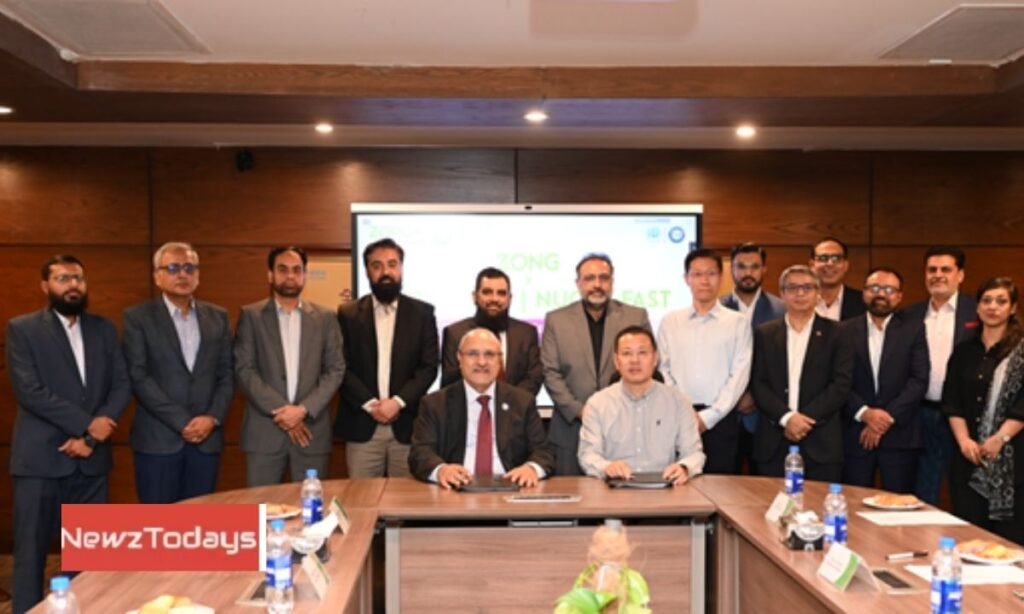
The new joint lab at NUCES-FAST Islamabad will focus on 5G, AI, and clean-energy research under the Belt and Road science partnership.
Zong Pakistan has signed a strategic understanding with Suzhou University of Science and Technology, Guangzhou Institute of Software Application Technology, and NUCES-FAST University to establish the China–Pakistan Low-Carbon Intelligent Manufacturing International Joint Innovation Laboratory in Islamabad. The initiative marks a significant step in deepening bilateral cooperation in science, technology, and sustainable industrial innovation.
Read More: Zong Internet Packages
According to Zong, the laboratory will function as a multidisciplinary research and development platform integrating cloud computing, artificial intelligence, and big-data technologies to accelerate low-carbon manufacturing solutions. Initial research will target four key areas: environmental protection through digital tools, intelligent manufacturing supported by 5G and AI, renewable-energy management via data analytics, and integrated IoT applications for industrial efficiency.
Dr. Mao Weiliang, Chief Technical Officer at Zong, said the initiative aims to build “a new ecosystem where research converges with real-world impact,” combining China and Pakistan’s technological expertise for sustainable industrial growth. Rector of NUCES-FAST Dr. Aftab Maroof noted the collaboration highlights the growing role of academia–industry partnerships in Pakistan’s innovation ecosystem.
The laboratory will also train young researchers and engineers in low-carbon and digital technologies, supporting applied research projects linked to the China–Pakistan Economic Corridor (CPEC). As the industrial facilitator, Zong will bridge academic research and enterprise applications, while Chinese and Pakistani institutions will contribute technical capacity and knowledge transfer.
Pakistan’s telecom and technology sector has seen a steady shift toward digital and green transformation, with national 5G trials and renewable-energy integration expected under the Ministry of IT’s 2025 roadmap. The new China–Pakistan laboratory underscores Zong’s continued investment in scientific cooperation and its role in aligning industrial innovation with sustainability goals under the Belt and Road framework.