
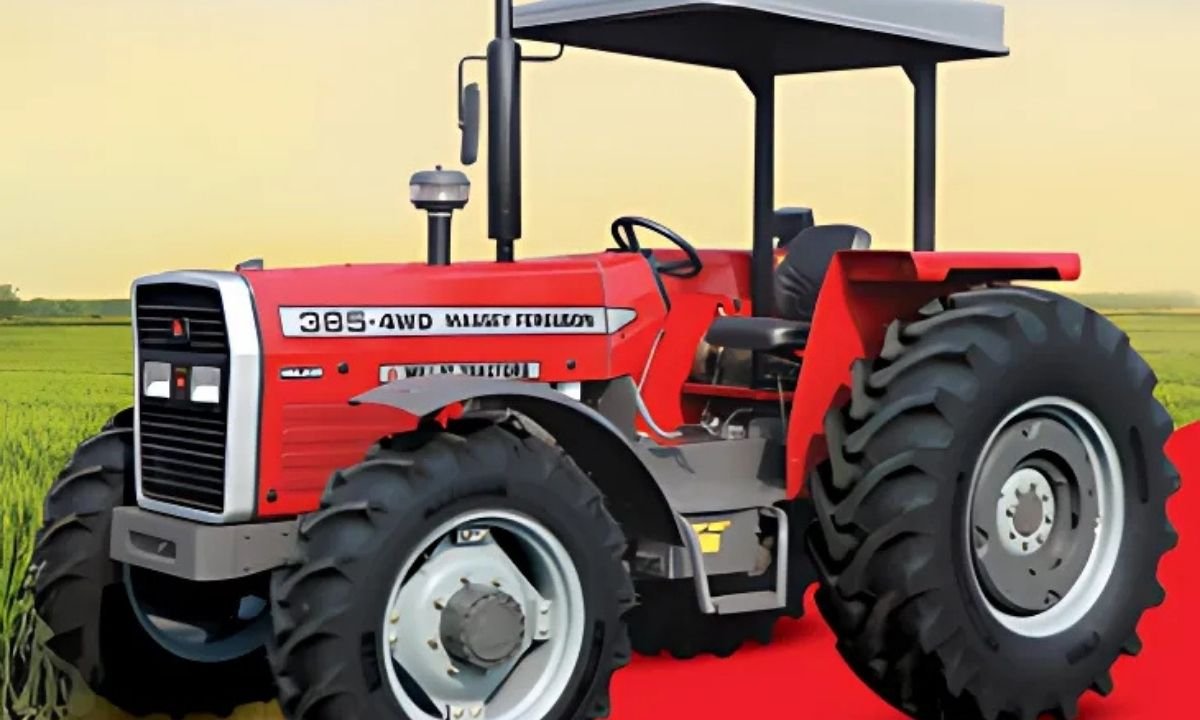
Millat Tractors flags weak local demand, eyes export push
Millat Tractors Limited (MTL) says domestic tractor market remains depressed, expects export expansion but keeps SELL rating at FY26E PE 18.1×.
The management of Millat Tractors Limited held its corporate briefing on November 17 to present its view of the company’s performance and outlook.
Read More: Millat Tractors profit drops 17% in 1QFY26
The company noted that the entry of Belarus-made tractors into Pakistan will increase competition, but that MTL’s dominant position should shield it from material adverse impact. The domestic tractor market is under strain: volumes in FY25 hit a 12-year low of approximately 29,000 units, said an industry summary.
MTL cited policy-driven distortions as a key headwind. The government’s Green Tractor Scheme and other subsidised programmes have led farmers to pause “normal market” purchases pending scheme announcements and balloting.
Management argued that while such schemes boost near-term demand, they distort sustainable growth by shifting sales into auctioned or subsidised orders instead of regular retail channels. To highlight this, MTL pointed to a 2,000-unit uptick in units sold in October 2025 under the Green Tractor Scheme — but added that delivery timelines have extended due to delayed payments under the scheme.
The company also flagged a shaky farm-economy backdrop: weak crop prices and stressed farmer finances make continuous month-on-month recovery of local sales unlikely. MTL believes the current uptick is largely driven by the scheme rollout rather than underlying demand. Given the structural weakness in mechanisation investment, the company expects the downturn to last before a cyclical recovery begins.
In response, MTL is actively looking outward: the company is entering new export markets such as Mexico where demand is strong, seeking to offset anticipated export declines to Afghanistan amid geopolitical tensions. The strategy reflects a broader shift by Pakistan-based tractor assemblers confronting stagnant domestic demand.
On the cost front, MTL highlighted its high localisation levels: overall local-vs-import component mix stands at 92 % local / 8 % imported; for low HP tractors 95 % local / 5 % imported; for high HP models 90 % local / 10 % imported. Imported components largely cover advanced parts like fuel pumps and 4-WD kits.
Finally, the company disclosed a sizeable tax-refund claim of Rs 7.59 b (as at June 30 2025), of which Rs 1.3 b relates to FY25.
Despite the strategic measures, Topline analysts remain cautious. At its current valuations (FY26E/27F PE of 18.1×/12.5×), the company retains a “SELL” recommendation due to the protracted domestic demand slump and reliance on policy-driven schemes. Management’s belief that the downturn has bottomed is optimistic but remains unproven.