
Beckett’s Waiting for Godot on a Pakistani Stage
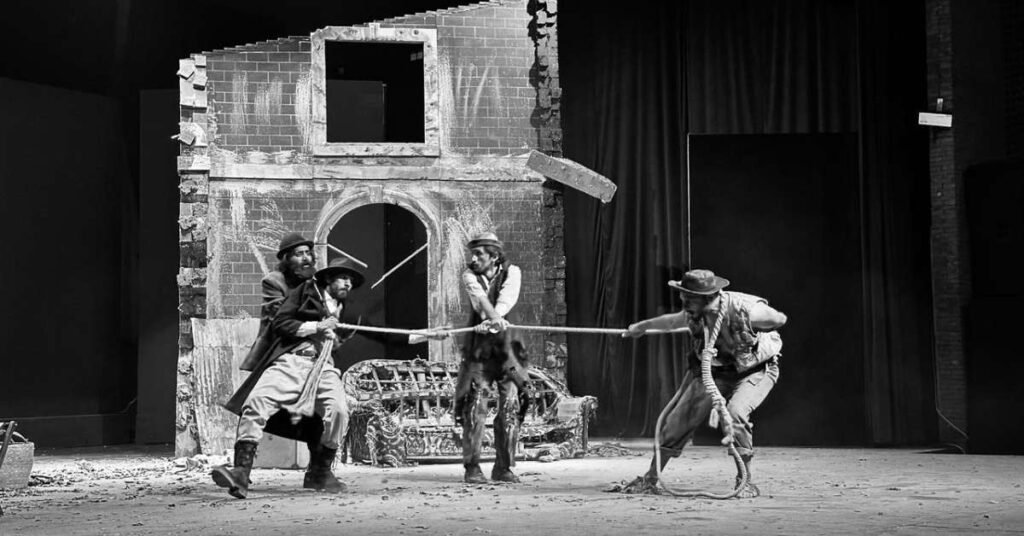
Qissa Khwani Theatrics presented an Urdu production of Samuel Beckett’s Waiting for Godot at the Pakistan National Council of the Arts (PNCA), Islamabad, staged from 1 to 4 January 2026.
Directed by Hammad Zulfiqar and produced by Ahmad Umar Ayaz, the production offered a restrained, disciplined interpretation that treated Beckett’s iconic play as a living, urgent inquiry rather than a canonical artifact.7th Sky Entertainment Brings another drama ‘Fitrat’
According to an official statement, translated into Urdu by Ahmad Umar Ayaz, the text retained Beckett’s philosophical weight while grounding it in a language that felt intimate and unsettlingly familiar. The production resisted spectacle and overt interpretation, allowing silence, repetition, and pause to shape the audience’s experience—inviting them to wait alongside the characters rather than observe from a distance.
Syed Qasim Shah (Dodo/Vladimir) and Muhammad Arslan (Gogo/Estragon) anchored the play with performances rooted in rhythm, dependency, and emotional restraint. Their portrayal highlighted the fragile balance between memory and forgetting, endurance and exhaustion. Comedy emerged organically through repetition and failure, revealing the quiet devastation beneath Beckett’s humor.
As Pozzo, Hammad Zulfiqar avoided caricature, presenting authority as casual cruelty rather than theatrical dominance. His performance made Pozzo’s eventual collapse deeply unsettling. Abdul Basit Mushtaq delivered a demanding performance as Lucky, rendering the famous monologue not as absurd excess but as a psychological breakdown under the crushing burden of thought. Usman Shafique, as the Boy, embodied the cruelty of deferred hope through quiet neutrality.
The visual language of the production embraced simplicity and timelessness. Costume Designer Areesh Amber created lived-in, period-neutral designs, while Makeup Artist Sarah Malik used subtle detailing to suggest fatigue and age without exaggeration. Production Managers Moazzam Rafique and Sundas Tanveer ensured seamless transitions and precise timing, keeping the technical machinery invisible and the world of the play intact.
What distinguished this production was its refusal to offer resolution or explanation. In an era where theatre is often expected to clarify and conclude, Waiting for Godot remained unapologetically ambiguous. The audience left not with catharsis, but with a shared, lingering silence—an experience that extended beyond the final applause.
By staging Waiting for Godot in Urdu, Qissa Khwani Theatrics reaffirmed the play’s universality. Waiting, repetition, power, and hope deferred are not distant European abstractions but lived realities. This production demonstrated that when theatre trusts silence, it does not offer escape—it offers recognition.
As Beckett intended, nothing was resolved. The waiting continued—now with the audience.