
CCP flags deep flaws in Pakistan pesticide market
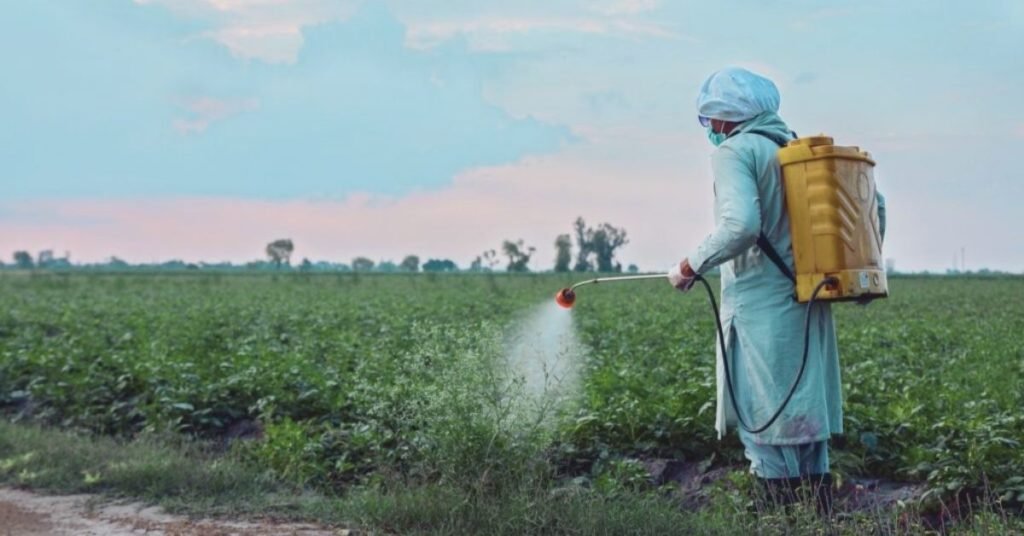
A detailed policy report issued by the Competition Commission of Pakistan has warned that Pakistan’s pesticide sector remains structurally weak, poorly regulated, and insufficiently competitive, despite the presence of multiple firms and extensive product availability.
The Commission said the market shows the outward appearance of competition but fails to deliver efficiency, innovation, or fair outcomes for farmers and consumers. Persistent regulatory gaps, enforcement failures, and policy distortions continue to undermine contestability across the pesticide value chain.
Read More: CCP Takes Notice of Misleading Packaging
The report observed that indigenous pesticide production in Pakistan faces steep entry barriers. Local manufacturing requires substantial capital investment, advanced technical expertise, and compliance with complex regulatory standards. These requirements favor incumbent firms with established infrastructure and financial capacity, while discouraging new entrants.
An import-centric business model dominates the sector. The absence of targeted policy incentives for domestic production has tilted commercial incentives toward imports rather than local formulation or manufacturing. This reliance exposes Pakistan’s agricultural input supply chain to global price volatility, foreign exchange shocks, and external supply disruptions.
According to the Commission, one of the most damaging distortions in the market is an unwritten two-year shelf-life rule applied to pesticides. The practice, though not consistently grounded in scientific evidence, forces companies to discard stocks that remain chemically stable and effective.
The premature disposal of viable products raises operating costs for importers and formulators. It disrupts supply planning and erodes margins across distribution networks. Farmers ultimately bear part of the burden through higher input prices and inconsistent product availability.
The report noted that advances in chemical formulation and preservation technologies have significantly improved the stability of modern pesticides. Many products can remain effective well beyond two years if stored under appropriate conditions. A rigid shelf-life assumption no longer reflects current scientific realities.
The Commission recommended that the two-year shelf-life restriction be formally reviewed and re-evaluated. It said the process should involve industry stakeholders, scientific experts, and relevant government departments to ensure decisions are evidence-based and transparent.
It also urged regulators to examine international practices before revising local rules. Countries such as the United States, Canada, Australia, and members of the European Union should be reviewed to determine how shelf life is regulated and enforced. Where extended shelf lives are not permitted, Pakistan must ensure its own safety and quality benchmarks are met.
The report stressed that any amendments to the Agricultural Pesticides Ordinance 1971 or related rules should be grounded in historical pesticide usage data. Import approvals should reflect realistic demand patterns to prevent overstocking, wastage, and unnecessary pressure on foreign exchange reserves.
Beyond shelf-life rules, the Commission identified counterfeit and adulterated pesticides as a major threat to market integrity. Fake products distort competition, reduce crop yields, and harm farmers’ incomes. They also pose serious risks to human health and the environment.
Recent enforcement actions have revealed the scale of the counterfeit problem. However, the report noted that weak prosecution and limited follow-through have reduced the deterrent effect of these efforts. Offenders often escape meaningful penalties, allowing illegal activity to persist.
The Commission called for a coordinated national response involving federal and provincial authorities alongside industry representatives. A uniform policy framework is needed to ensure pesticide quality standards are applied consistently across the country.
Field inspection capacity remains inadequate, particularly in Punjab and Sindh, where pesticide usage is high. The report recommended increasing inspection staff, improving equipment, and strengthening logistical support in high-risk regions.
Regulatory penalties should also be strengthened. The Commission proposed higher fines, cancellation of licenses, and imprisonment for serious violations to deter counterfeit production and distribution. Existing laws, it said, lack sufficient punitive force.
To support enforcement, the report recommended the establishment of dedicated legal support units. These units would assist inspectors in filing FIRs, preparing legal documentation, and pursuing cases through the courts. Timely and effective prosecution is critical to restoring regulatory credibility.
Laboratory capacity was identified as another systemic weakness. Provincial pesticide testing laboratories are under-equipped and understaffed. Many lack the technical capability to detect sophisticated adulteration or assess newer pesticide chemistries.
The Commission said strengthening laboratory infrastructure is essential for a well-functioning and competitive market. Upgraded facilities should comply with international testing standards and protocols to ensure accuracy and reliability.
Human resource development must accompany physical upgrades. The growing use of bio-pesticides and botanical products requires specialized skills that are currently in short supply. Chemists, toxicologists, and trained laboratory technicians are needed to support effective quality assurance.
Operational budgets for testing facilities should be increased to allow uninterrupted testing activities. The report also called for permanent technical staffing at the Department of Plant Protection to reduce delays and improve service delivery.
Partnerships with academic and research institutions were recommended to build technical expertise and promote innovation. Memorandums of understanding could help transfer knowledge and ensure the long-term sustainability of laboratory services.
The Commission also emphasized the need to enable local production of pesticides, particularly active ingredients. Pakistan’s heavy reliance on chemical inputs for major crops such as cotton, rice, and vegetables makes domestic capability strategically important.
The absence of local active ingredient manufacturing contributes to persistent foreign exchange outflows. It also leaves the agricultural sector vulnerable to international supply disruptions and geopolitical shocks.
To address this, the report recommended developing a National Pesticide Manufacturing Policy focused on domestic production of active ingredients. Initial efforts should target chemicals most commonly used in high-demand crops, starting with cotton.
A phased approach was proposed. The first phase should prioritize research and development. Competitive research grants through the Higher Education Commission could promote innovation in synthetic chemistry, green alternatives, and cost-efficient production methods.
Commercial production could follow through the designation of Special Economic Zones under the China–Pakistan Economic Corridor or other industrial frameworks. These zones should offer tax incentives, duty exemptions, and infrastructure support, including utilities and waste management.
Technology transfer through international partnerships would be essential. The report highlighted recent engagement with China, including short-term training scholarships for 1,000 agricultural graduates. Given China’s status as a leading global pesticide producer, collaboration could accelerate Pakistan’s learning curve.
The Commission recommended that the scholarship initiative include research on local active ingredient production. Such exposure could provide practical insights into large-scale manufacturing, regulatory compliance, and environmental safeguards.
The report also referenced international sustainability trends, including the European Green Deal. The EU aims to reduce both pesticide use and risk by 50 percent by 2030, with an emphasis on safer alternatives and integrated pest management.
Adopting similar long-term targets could help Pakistan align its pesticide policy with global sustainability standards. It could also encourage innovation in bio-pesticides and climate-resilient pest control methods, reducing reliance on imports over time.
Youth unemployment and weak distribution networks were addressed through recommendations on agri-entrepreneurship. The Commission proposed targeted initiatives to support agriculture graduates entering the pesticide distribution sector.
Many plant pathologists, entomologists, and agronomists face high entry barriers due to licensing costs, inventory requirements, and regulatory complexity. Incubation centers linked to agricultural universities could provide training in business planning, compliance, and advisory services.
Financial facilitation, including interest-free loans or tailored microfinance schemes, could enable graduates to establish licensed distribution units. This approach would strengthen last-mile delivery and improve farmer access to technical advice.
Graduates with specialized knowledge are better positioned to guide farmers on safe pesticide use, appropriate product selection, and integrated pest management. Over time, this could improve stewardship and reduce misuse.
Regulatory fragmentation following devolution was identified as a major source of inefficiency. Overlapping federal and provincial jurisdictions have created compliance burdens and delays, particularly in product registration.
The Commission recommended that pesticide registration remain exclusively under the federal government, specifically the Department of Plant Protection. Centralized registration would reduce duplication and legal ambiguity.
Provincial agriculture departments should focus on implementation and enforcement. Their role should include issuing no-objection certificates to distributors, monitoring availability, and reporting violations.
To operationalize this division of responsibilities, provincial laws that overlap with federal mandates should be reviewed, amended, or repealed. Clear jurisdictional boundaries would improve coordination and efficiency.
The Form-1 pesticide registration process was also flagged for reform. The Commission said procedural complexity and redundant documentation slow market entry for safe products.
Simplifying application forms, reducing processing times, and decentralizing approvals could improve efficiency. Removing mandatory approvals from committees such as APTAC and Sub-APTAC would eliminate major bottlenecks.
The report concluded by calling for climate-adapted and locally customized pesticide solutions. Imported formulations developed for different agro-climatic conditions often perform poorly in Pakistan, leading to resistance, overuse, and higher costs.
Mandatory region-specific field trials were recommended for imports under Form 16 and 17. Products should demonstrate efficacy under Pakistan’s agro-ecological conditions before approval.
Aligning pesticide policy with the United Nations Sustainable Development Goals was presented as a strategic imperative. Improved regulation can support food security, public health, water protection, climate action, and institutional transparency.
The Commission said that without decisive reforms, Pakistan’s pesticide sector will remain inefficient, import-dependent, and vulnerable. A coordinated, science-based, and competition-focused policy framework is essential to ensure sustainable agricultural growth and farmer welfare.