

How to Vacate Illegal Land Occupation in Punjab
Punjab government has rolled out Protection of Ownership of Immovable Property Ordinance 2025 aimed at ending land grabbing and fast-track justice for rightful owners.
The Punjab Protection of Ownership of Immovable Property Ordinance 2025 envisaged a new legal framework to protect land and building owners. It is also aimed at delivering quicker civil and criminal action against unlawful possession across the province.
Read More: Digitization of Cadastral Mapping to ensure land record
Punjab has promulgated the ordinance in late October under Article 128 of the Constitution of Pakistan while the provincial assembly was not in session. It was granted immediate effect across Punjab.
How To Vacate Illegal Land Occupation in Punjab
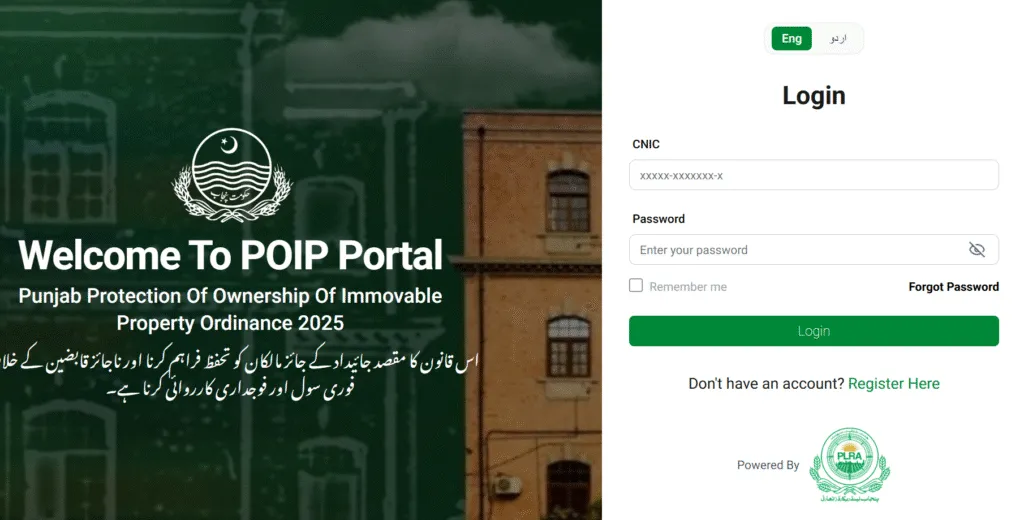
If you are victim of illegal land occupation in Punjab, here’s a step-by-step guide. You will have to register on portal to register your account. You will be required to Visit Portal to Create Account.
- Secure and organize your proof of ownership
You will have to collect the latest Fard / ownership record, mutation entries, registry/sale deed, court orders (if any), and inheritance papers (if relevant). You have also to provide CNIC copies and a short timeline of how the occupation happened. - Gather evidence of illegal occupation
You will have to take dated photos/videos of the occupation, boundary encroachments, locks, construction, crop harvesting, threats, or any forced entry. You can also provide witnesses, their names and contact details if you have any. You will have to keep copies of any prior police diaries or applications. - File a POIP complaint through the official portal
You will have to visit the POIP portal to submit your complaint online. You will be required you to open account and OTP verification. The portal supports English and Urdu complaint filing. - Alternatively, submit a protection request to the Deputy Commissioner
If online filing is difficult, the ordinance enables the owner/title holder to file the complaint with the Deputy Commissioner (DC) of the district where your property is located. This is the main entry point under POIP. - Your case goes to the district Dispute Resolution Committee
The ordinance has also set up a district Dispute Resolution Committee which is led by the DC, and senior revenue and police also have participation. This forum has been set up to stop long delays and handle possession disputes quickly. - Appear in person and present records clearly
You will have to be ready to show original documents and explain the facts in simple terms. You should keep your claim consistent with land records. If the committee asks for verification, you will have to cooperate promptly. - Track timelines and push for timely hearings
Ordinance has set a 90-day disposal target for property-related complaints under the new system. You can use your portal tracking and keep written follow-ups to the DC office if hearings have been stalled. - If unresolved, your matter moves to a Property Tribunal
The ordinance also provides referral to a Property Tribunal for further proceedings on ownership/possession issues under POIP’s fast-track mechanism. - Enforcement and handover after decision
Once an order is passed in your favour, the ordinance has developed system to ensure prompt restoration of possession to the lawful owner through administrative and criminal mechanisms - Avoid missteps: false or malicious complaints carry penalties
The ordinance also provides strict punishment for false or malicious applications.So only file what you can prove with documents and evidence.