

Nepra On Driving Seat Now To Block Solar Net Metering
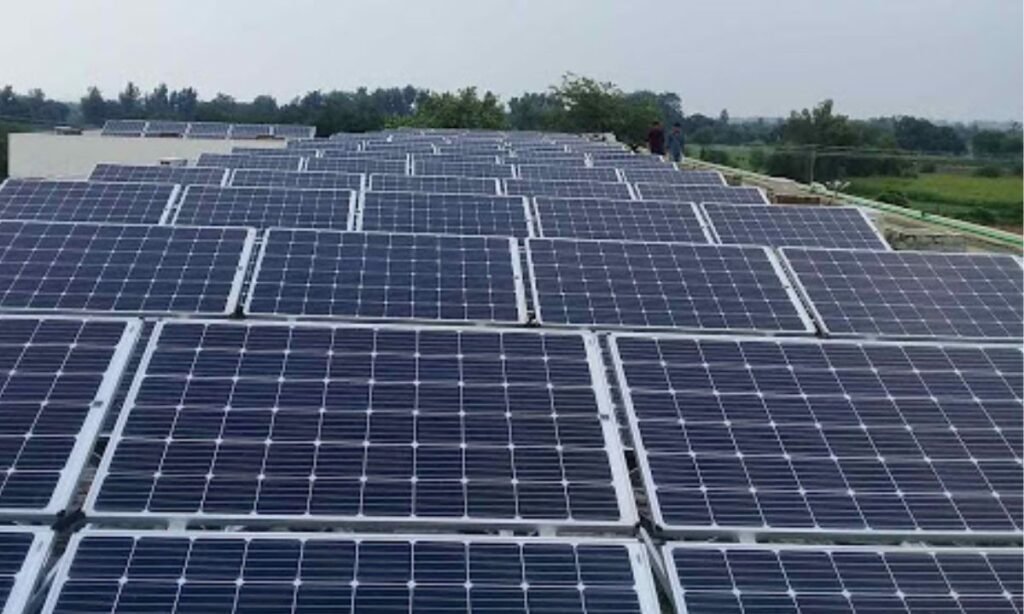
The power division has been struggling to tighten policy to discourage a use of solar net metering. But prime minister Shahbaz Sharif had blocked a move to avoid the political backlash.
Now the ball is in court of National Electric Power Regulatory Authority (Nepra) which is on driving seat now to tighten rules aimed at blocking use of solar net metering amid rising cost of electricity and higher taxes.
Read More: Discos seek fixed charges on solar net metering
The consumers on grid are paying more than 56 percent taxes and 70 percent capacity payments out of total electricity cost. The higher electricity cost had pushed the consumers towards solar net metering which is believed to be cheaper source of electricity supply.
Nepra has proposed sweeping changes to block Pakistan’s solar net metering regime. It proposes to lower buyback rates and tighter capacity limits apparently aimed at stabilising the power system amid rapid rooftop solar growth.
The National Electric Power Regulatory Authority has released draft Prosumer Regulations, 2025. The regulator invited public comments within 30 days. The proposed rules are said to replace the existing net metering framework introduced in 2015.
Nepra said the changes are aimed at protecting grid stability while still allowing consumers to use solar energy to cut electricity bills.
Meanwhile the regulator admitted that rising tariffs, taxes and surcharges have accelerated the shift toward rooftop solar.
Under the draft regulations, consumers will be banned to install solar systems exceeding their approved electricity load. A consumer with a 10-kilowatt sanctioned load will not be allowed to install more than a 10-kilowatt solar system.
Currently, consumers can install solar capacity up to one-and-a-half times their approved load. The regulator said the existing practice has resulted in excessive surplus generation being pushed onto the grid.
Nepra has also proposed to cut the duration of net metering contracts for new connections. The contract period would be reduced to five years from the current seven years.
Any extension beyond five years would depend on mutual agreement between the consumer and the power distribution company. Nepra said shorter contracts would enable the regulator to make periodic review of terms in line with system conditions.
Existing net metering consumers will continue under the current rules until the expiry of their seven-year contracts. After contract period, the new framework apply.
One of the most significant proposals is a sharp cut in the rate which is paid for surplus electricity supplied to the grid. Under the draft rules, excess units would be purchased at the National Average Energy Purchase Price.
Nepra has proposed this rate at around Rs 13 per unit, which is roughly half of the current buyback rate of about Rs 26 per unit. The regulator said the current rate does not reflect actual system costs.
Officials argue that higher buyback prices have created cross-subsidies. They believed that cost had been shifted onto non-solar consumers. Distribution companies have been repeatedly raising issue of revenue erosion due to net metering payouts.
Pakistan’s rooftop solar capacity has increased rapidly over the past three years. Nepra data shows grid-connected solar capacity had crossed 6,000 megawatts due to solar net metering expansion.
Total installed solar capacity which also included off-grid systems has exceeded 13,000 megawatts due to higher electricity rates and unreliable grid supply.
According to the Power Division, average power tariffs for many residential consumers have doubled since 2022. This has made rooftop solar financially attractive for the consumers despite high upfront costs.
The regulator said uncontrolled solar injections had resulted in technical risks to transformers and local distribution networks. This follows voltage fluctuations and reverse power flows in some areas.
To address these concerns, the regulator has introduced proposed draft rules for local-level capacity caps at 80% of its capacity.
Nepra said the limit is essential to ensure safety and maintain system stability. Utilities have been arguing that infrastructure was not capable of high levels of distributed generation.
The draft regulations impose additional technical requirements for larger installations. Applicants seeking solar systems of 250 kilowatts or more would be required to submit detailed grid impact studies.
Power distribution companies would review applications and issue cost estimates within defined timelines.
Nepra said the rules also set procedures for connection approvals and system upgrades. The regulator aims to cut delays while ensuring technical compliance.
Pakistan introduced net metering in 2015 aimed at encouraging renewable energy adoption. The policy initially had witnessed slow uptake due to low tariffs and limited awareness.
The pace accelerated after 2022, when fuel imports surged resulting in higher electricity rates to meet IMF programme conditions. Solar panels also became cheaper due to global oversupply and consumers started switching to solar net metering.
According to the International Renewable Energy Agency, global solar module prices dropped sharply between 2022 and 2024. This further led to improving payback periods for Pakistani consumers.
Distribution companies, however, are of the view that the current net metering model undermines the viability of the grid. They argue that fixed network costs are putting burden on non-solar users.
Industry groups representing solar installers have sharply criticised earlier proposals to reduce buyback rates. They are of the view that sudden policy shifts could result in hurting investor confidence and slow clean energy adoption.
Nepra said it has struggled to strike a balance between consumer incentives and system sustainability. The regulator also emphasised that consumers would still be benefitting from self-consumption savings.
In India, some states have cut compensation rates or imposed capacity caps to manage grid impacts. Similar debates are going on in Australia and parts of Europe.
Pakistan’s power sector faces deep structural challenges due to different challenges. Circular debt crossed Rs 2.6 trillion, according to the Ministry of Energy.
High capacity payments to power producers and losses at distribution companies are other challenge and remain persistent issues.