
Rs. 221B Disbursed Under PM Youth Business & Agriculture Loan Scheme
Banks On Board to Expand SME Credit from GB to Balochistan
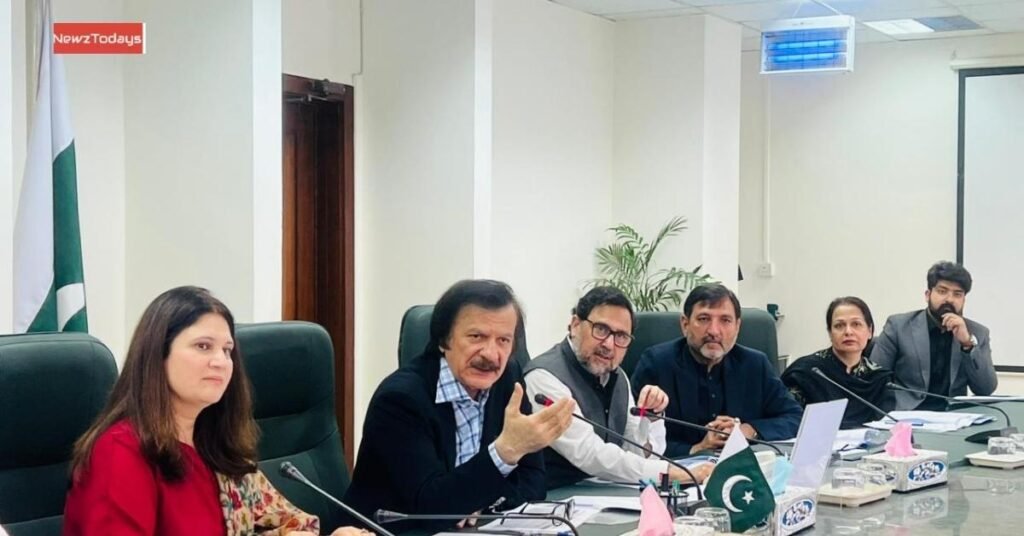
Islamabad: The 15th meeting of the National Coordination Committee (NCC) on Small and Medium Enterprises (SME) Development was held under the chairmanship of the Special Assistant to the Prime Minister on Industries and Production, Haroon Akhtar Khan.
The meeting was attended by Secretary Ministry of Industries and Production Saif Anjum, CEO of Small and Medium Enterprises Development Authority (SMEDA), representatives of provincial ministries, and officials from the banking sector.
The Committee was informed that the banking sector has provided SME financing amounting to Rs. 882.4 billion to 302,922 borrowers. As of December 31, 2025, total outstanding SME financing stood at Rs. 882 billion, reflecting a 36% year-on-year increase, while the number of SMEs facilitated reached approximately 303,000, marking a 65% year-on-year growth.
Read More: SME Task Force Planned For Balochistan Development
Under the SAAF Scheme, Rs. 60 billion in clean lending was extended, benefiting 12,500 SMEs. Similarly, under the Prime Minister Youth Business and Agriculture Loan Scheme, financing of Rs. 221 billion was disbursed, facilitating 461,795 SMEs and beneficiaries.
The first agenda item focused on revising the definition of SMEs by enhancing the annual sales turnover threshold. It was proposed that micro enterprises be defined as businesses with annual sales up to Rs. 30 million, small enterprises from Rs. 30 million to Rs. 400 million, and medium enterprises from Rs. 400 million to Rs. 2,000 million.
Haroon Akhtar Khan stated that revising the definition and scope of SMEs is the need of the hour and emphasized that federal and provincial institutions would adopt the updated framework. He added that SMEs are the backbone of the economy and that, under the leadership of Prime Minister Shehbaz Sharif, the government is undertaking comprehensive measures to promote and strengthen the sector.
He further noted that there is complete consensus between the federation and provinces regarding the revision of the SME definition and scope.
The second key agenda item was the implementation of the National SME Policy 2021. The Committee emphasized that effective implementation of the policy across Pakistan would empower MSMEs and enhance their contribution to economic growth. SMEDA and provincial authorities were directed to ensure regular follow-up and progress reporting.
Highlighting access to finance as a key driver for SME growth, Haroon Akhtar Khan stated that all banks are on board to facilitate credit access for SMEs from Gilgit-Baltistan to Azad Jammu & Kashmir and Balochistan. He added that the Industrial Policy also focuses on ease of access to credit and tax relief measures to further support the sector.
The Special Assistant also termed Skill Development Bonds and Artificial Intelligence (AI) training initiatives for SMEs as encouraging steps. He described SMEDA’s efforts to equip SMEs with modern skills and AI-based training as a significant advancement toward enhancing competitiveness and innovation in the sector.