Policy Dialogue Calls For EV Framework
NewzToday Report
Policy dialogue has called for stable EV framework, and wider charging networkfor accelerating affordable electric mobility across Pakistan
Indus Consortium hosted a policy dialogue titled “Electrifying Everyday Mobility: Advancing Public Transport and Two & Three-Wheelers” at the Pakistan Red Crescent.
The dialogue was a part of the Climate Justice Youth Film Festival, which brought together representatives from government ministries, academia, financial institutions, the private sector, development partners and civil society to discuss practical pathways for accelerating affordable electric mobility across Pakistan, in line with the Government’s New Energy Vehicle (NEV) Policy 2025 to 2030.
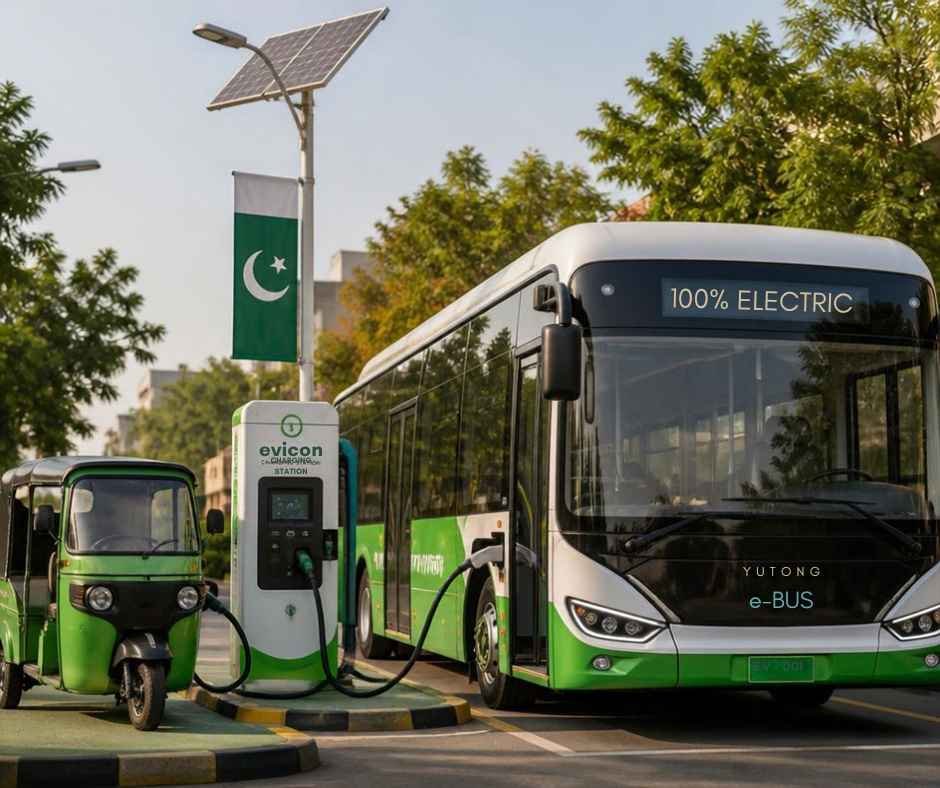
The policy targets 30 per cent electrification of all new vehicle sales by 2030, with a specific target of 50 per cent electrification for two-wheelers, three-wheelers and buses over the same period.
The Policy Dialogue session was moderated by Ms Fiza Qureshi, Coordinator, Big Shift Global.
Speakers included Mr Rashid Azeem, Head of Sustainability, ESG and Climate Risk, UBL; Ms Noreen Ghaffar, Executive Member, RCCI; Dr Khalid Waleed, Research Fellow, Sustainable Development Policy Institute; Ms Shaheen Akhtar, Deputy Chief Manager , Internal Monitoring Division, State Bank of Pakistan; and Dr Tariq Usman, Deputy Director, Khyber Pakhtunkhwa Department of Transport and Mass Transit.
In his welcome remarks, Mr Liaqat Ali, Board of Directors member, Indus Consortium, said Pakistan needed a stable, long-term EV policy framework instead of frequent changes, so that industry and financial institutions could plan and invest with confidence.
Senator Poonjo Mal Bheel, member senate standing committee on power, said charging and battery-swapping infrastructure must be expanded well beyond highways into cities, residential areas and rural regions to support everyday EV use, and that the national grid required upgrading and stronger integration with renewable energy to reliably meet growing EV demand.
Dr Fateh Marri, Vice Chancellor of Sindh University Jamshoro acknowledged Indus Consortium for engaging university students in creativity initiative of film festival. He said youth is future of country, and they will be equipped with knowledge, skills, & exposure to showcase their ideas and thoughts through films.
Speakers urged that the local manufacturing of EVs, batteries and components should be promoted as a distinct industrial priority to reduce costs and build a self-sustaining EV industry. They said banks and financial institutions needed clearer standards on battery life and resale value, along with de-risking mechanisms, to unlock affordable EV financing for consumers and businesses, and called for closer coordination between government ministries, regulators, financial institutions and industry to ensure policy, grid development and financing moved forward together towards the 2030 targets.
Read More: Toyota Accelerates EV Push, Hybrids Remain Key for Pakistan
The discussion focused on innovative financing and leasing mechanisms, effective delivery of consumer incentives and subsidies, expansion of charging and battery-swapping infrastructure, localisation of EV manufacturing and supply chains, integration of renewable energy with electric mobility, and the policy and regulatory reforms needed to create an enabling investment environment. The dialogue also provided a platform for stakeholders to share international and national best practices and develop actionable recommendations to support Pakistan’s transition towards a cleaner, more resilient and climate-smart transport system.
The policy dialogue was followed by screening of short films developed by the participating university students. The first prize went to University of Baluchistan, Quetta, runner up was NED University of Engineering and Technology while third prize was awarded to University of Sindh, Jamshoro. Other participant universities included Pir Maher Ali Shah Arid Agriculture University, Rawalpindi, University of Engineering and Technology, Peshawar, Sindh Agriculture University, Tandojam and Muhammad Nawaz Sharif Agriculture University, Multan