

CCP Urges Deep Overhaul of Pakistan Gold Market
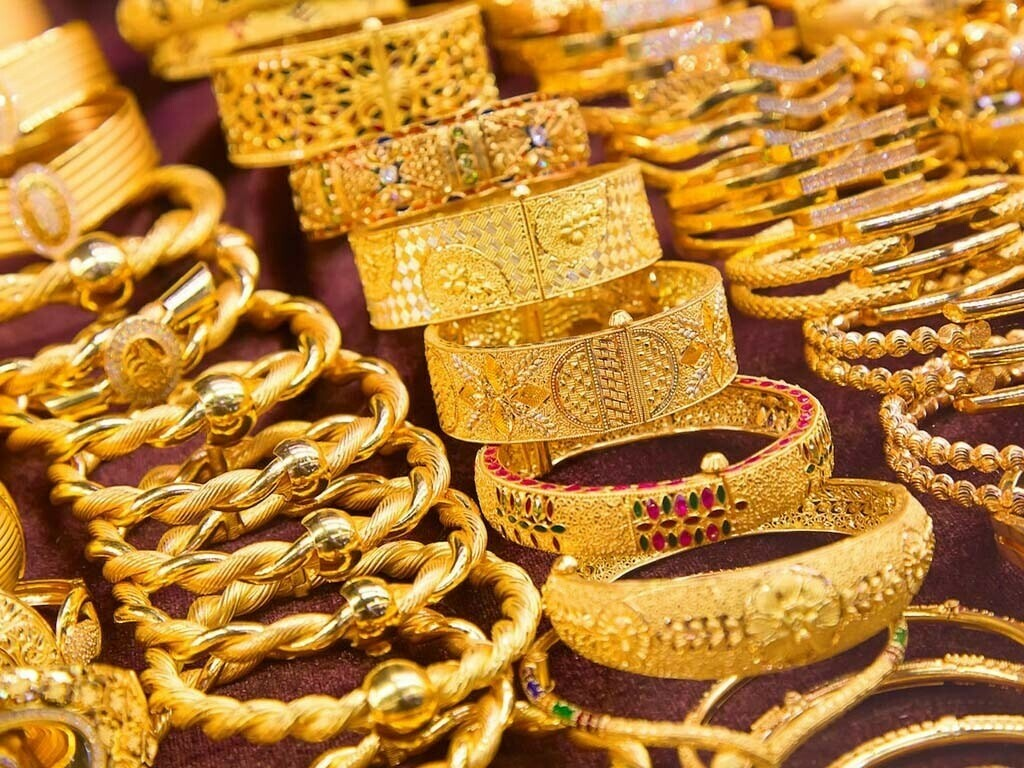
Pakistan’s gold market needs sweeping reform to curb informality, price manipulation and smuggling, the Competition Commission of Pakistan’s research arm has warned in a landmark study.
The Competition Assessment Study on the Gold Market in Pakistan, prepared by the Commission’s Center of Excellence in Competition Law, is the first systematic review of how the country buys, sells and regulates gold. It finds more than 90% of trade occurs outside formal channels, leaving regulators blind and consumers exposed.
Pakistan’s gold market straddles culture and finance, with weddings and festivals driving roughly 70% of demand and households using jewellery as an inflation hedge. Annual consumption in recent years is estimated between 60 and 90 tonnes, placing Pakistan among South Asia’s larger physical gold markets despite its relatively small formal footprint.
On the macro side, Pakistan’s official gold reserves have climbed to record levels even as domestic trade stays opaque. Data compiled by CEIC and Trading Economics show reserves around 64.7 tonnes in volume and about $5.9bn in value by early 2025, up sharply from historical averages below $1bn.
The report warns that this disconnect between a growing sovereign hoard and an informal domestic market poses policy and financial stability risks. Price signals are distorted, tax collection is weak and authorities lack basic data on volumes, margins and players along the value chain.
The assessment highlights a complex regulatory maze as a central problem for the Pakistan gold market. Oversight today is split between the Ministry of Commerce, Federal Board of Revenue, State Bank of Pakistan, Trade Development Authority and Pakistan Gems and Jewellery Development Company, each operating narrow mandates with limited coordination.
Key rules include SRO 760 on import and export procedures, SRO 924 on anti-money-laundering duties for jewellers and SRO 297 on differential tax rates. The study says frequent policy changes, overlapping authorities and high compliance costs have pushed traders toward cash-based, undocumented channels instead of encouraging formalisation.
According to the executive summary, gold imports officially reached about $17m in 2024, a modest figure compared with anecdotal estimates of physical flows. Market participants interviewed by the authors cited continued smuggling through western borders, under-invoicing at ports and widespread use of informal hawala networks for settlement.
At the same time, global gold prices and demand have surged, increasing incentives for arbitrage. World Gold Council data show total demand hit a record 4,974 tonnes in 2024, while benchmark prices set fresh highs with an average of $2,386 an ounce that year.
The study argues that Pakistan risks missing this global up-cycle because its domestic market structure remains dominated by a handful of large wholesalers and powerful sarafa associations. Daily retail prices are effectively announced by the Karachi Sarafa Association, which tracks international benchmarks but adds opaque premiums linked to the rupee exchange rate and local supply conditions.
Limited refining capacity compounds these distortions. The report notes Pakistan has almost no commercial-scale gold refining and relies on imported or smuggled refined metal, even as its central bank holds sizeable bullion reserves. This also means any future domestic mine output would likely be shipped abroad for processing unless policy changes spur local investment.
Read More: Gold Prices Increased by Rs 7700 Per tola
That question is urgent because the giant Reko Diq copper-gold deposit in Balochistan is finally moving toward production. A feasibility study completed this year confirmed reserves exceeding $60bn at prevailing prices, with 17.9m ounces of gold and 13.1m tonnes of copper expected over a 37-year mine life starting 2028.
Barrick Gold, which holds 50% of the project alongside federal and provincial entities, expects Reko Diq to generate about $74bn in free cash flow over its life. Analysts say the mine could transform Pakistan’s mineral exports and reshape the domestic gold value chain if governance is strong and local processing develops in parallel.
The Competition Commission’s research team warns however that without reforms, Reko Diq’s output could deepen concentration and encourage rent-seeking instead of broad-based growth. It calls for clear rules on offtake allocation, transparent pricing linked to international benchmarks and competitive access for refiners, jewellers and financial institutions.
To tackle structural weaknesses, the study proposes creating a Pakistan Gold and Gemstone Authority as a single regulator with a unified rulebook. The authority would consolidate licensing, trade permissions, AML oversight and quality enforcement, mirroring models used in Dubai’s Dubai Multi Commodities Centre and other major gold hubs.
The authors also push for mandatory assaying and hallmarking nationwide, building on pilot facilities run with the Pakistan Standards and Quality Control Authority. They argue that a regime similar to India’s mandatory hallmarking network, which now spans more than 1,600 assaying centres, could sharply reduce adulteration and lift export prospects.
Digital transparency is another plank. The report recommends introducing blockchain-based traceability for bullion and jewellery, integrated with the tax authority’s Track and Trace system, to document each transaction from import or refinery to retail counter. Comparable platforms in the UAE have helped reduce conflict-linked gold flows and support compliance with evolving global AML standards.
A more novel idea is a dedicated gold banking framework, inspired by Türkiye’s experience mobilising “under-the-pillow” household reserves. Turkish banks have allowed clients to deposit physical gold and hold it in interest-bearing accounts, with the central bank accepting bullion as part of reserve requirements. The study suggests pilot schemes with Pakistani commercial banks could channel dormant household savings into the formal system.
The timing of these proposals is shaped by a changing macroeconomic backdrop. Pakistan has seen inflation slow sharply from peaks above 30% in 2023 to low single digits this year, allowing the central bank to cut policy rates to 12% after a series of reductions. Yet households remain wary of the rupee after years of volatility, supporting continued demand for physical gold.
The report concludes that reforms to the Pakistan gold market could support broader goals on revenue mobilisation, governance and financial deepening set under Pakistan’s current IMF programme. Stronger oversight of bullion flows would also complement the country’s exit from the Financial Action Task Force grey list, achieved in 2022 after extensive AML reforms.
If policymakers move quickly, the study argues, Pakistan can leverage rising official reserves, the coming Reko Diq production and deep household affinity for gold to build a transparent, competitive and export-oriented Pakistan gold market that supports long-term economic resilience.