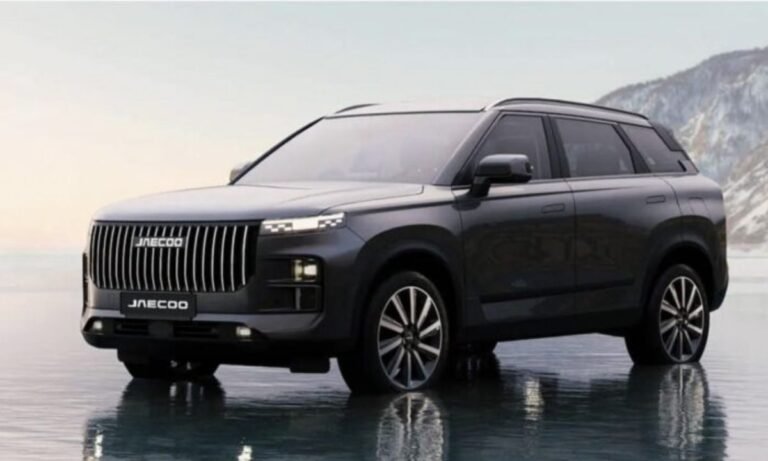

China’s EV Exports Surpass Gas Cars for First Time
In a significant shift in the global automotive market, China has for the first time exported more New Energy Vehicles (NEVs), including electric vehicles (EVs) and plug-in hybrids (PHEVs), than traditional gasoline-powered cars. This milestone, achieved in April 2026, highlights the accelerated transition towards electric mobility and China’s expanding influence in the EV sector worldwide.
China, recognized as the world’s largest car exporter, witnessed its EV exports surpass those of internal combustion engine (ICE) vehicles, signaling a new era where electric vehicles dominate global trade. This change reflects both the saturation of China’s domestic vehicle market and the burgeoning international demand for affordable and environmentally friendly transportation options.
Domestically, April 2026 saw a 21.5% decline in retail car sales within China, prompting automakers to increase their focus on foreign markets to sustain production. Concurrently, global economic uncertainties and rising oil prices have made gasoline-powered cars less attractive, encouraging consumers and governments worldwide to adopt electric alternatives.
China’s strategic control of over 80% of the global supply for battery materials has empowered its manufacturers to produce competitively priced EVs. This vertical integration in the supply chain enables Chinese automakers to offer cost-effective electric vehicles to emerging markets, particularly in Southeast Asia, Latin America, and parts of Europe.
Key players contributing to this surge include Tesla and BYD, whose manufacturing capabilities have significantly influenced global EV availability. Tesla’s Shanghai Gigafactory serves as a pivotal hub for large-scale EV production, helping reduce costs and lower prices internationally. Meanwhile, BYD benefits from its in-house production of batteries and semiconductors, allowing it to competitively price models like the BYD Seagull, which cater to the growing middle-class demand in multiple countries.
However, this rapid expansion has also led to geopolitical tensions, with some nations in North America and the European Union implementing protective measures such as tariffs and software restrictions on Chinese-made vehicles. This has resulted in a bifurcated automotive market, where Chinese EV technology prevails in many regions of the Global South and Europe, while North America maintains protective barriers.
The global impact of China’s EV export dominance extends to markets like Pakistan. Although EV adoption remains in its early stages locally, the influx of affordable Chinese electric vehicles is expected to accelerate Pakistan’s transition to electric mobility. Lower prices and increasing availability of EV models could motivate Pakistani consumers to shift towards more sustainable transportation options in the near future.
In conclusion, China overtaking gasoline-powered car exports with electric vehicles marks a definitive shift toward an electric future. As traditional automakers face challenges adapting to this evolving landscape, the expanding electric vehicle market presents new opportunities and challenges worldwide. For countries like Pakistan, this global EV revolution promises increased access to affordable and clean mobility solutions, indicating important changes on the horizon for the automotive industry.