

FBR raises sales tax valuation for local steel products
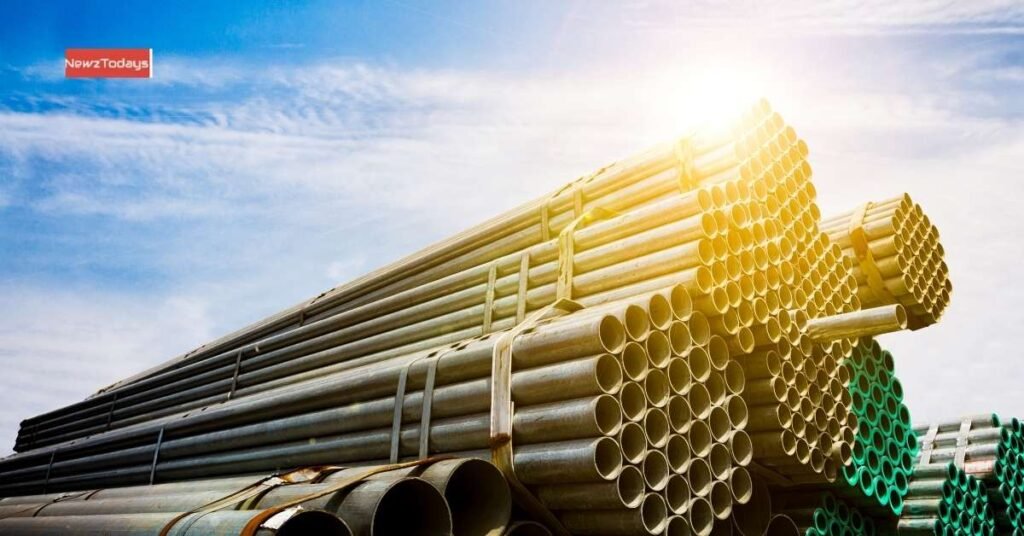
The Federal Board of Revenue has raised the minimum value for sales tax calculation on locally produced steel products.
The government has notified new valuation rules through S.R.O. 2402(I)/2025 and came into effect on December 10. It has replaced the earlier framework issued in 2024.
In a notification issued here, the Federal Board of Revenue said it has re-fixed the minimum value of supply of locally produced steel goods on an ad valorem basis for sales tax purposes.
The revised valuation applies to steel bars and long profiles, steel billets, steel ingots or bala, and ship plates, according to the notification.
Read More: Steel Industry proposes tax credit for steel bars
For steel bars and other long steel profiles, the minimum value inclusive of sales tax has now been linked to the average national retail price of steel bars.
This average will be calculated using monthly retail prices from Lahore, Karachi, Peshawar, Quetta, Rawalpindi, and Islamabad, as published by the Pakistan Bureau of Statistics.
From this calculated average price, Rs 1,500 per metric ton will be deducted to arrive at the minimum taxable value.
In the case of steel billets, the minimum value inclusive of sales tax has been fixed at 85% of the determined value under the new framework.
For steel ingots or bala, the minimum taxable value has been set at 80% of the value, while ship plates will be taxed at a minimum of 75% of their value.
Tax officials said the revised valuation regime is aimed at curbing chronic under-reporting of prices and production volumes within the steel manufacturing sector.
According to official estimates, revenue leakages in the steel sector have cost the exchequer tens of billions of rupees annually through suppressed sales declarations.
In recent years, the FBR has increasingly depended on minimum value regimes and production monitoring to plug gaps.
Pakistan’s steel demand has remained volatile, which closely tracks construction activity, public infrastructure spending, and overall economic conditions.
Data from industry associations show that local steel consumption jumped during the construction boom of 2021–22, before slowing amid high interest rates and fiscal tightening.
Despite softer demand, retail steel prices have been elevated due to currency depreciation, higher energy costs, and imported scrap price fluctuations.
Officials said the new rules would also result in helping improvement in sector documentation by narrowing the gap between actual market prices and declared values.