
Oil, Gas Output Falls 3%: AHL Data
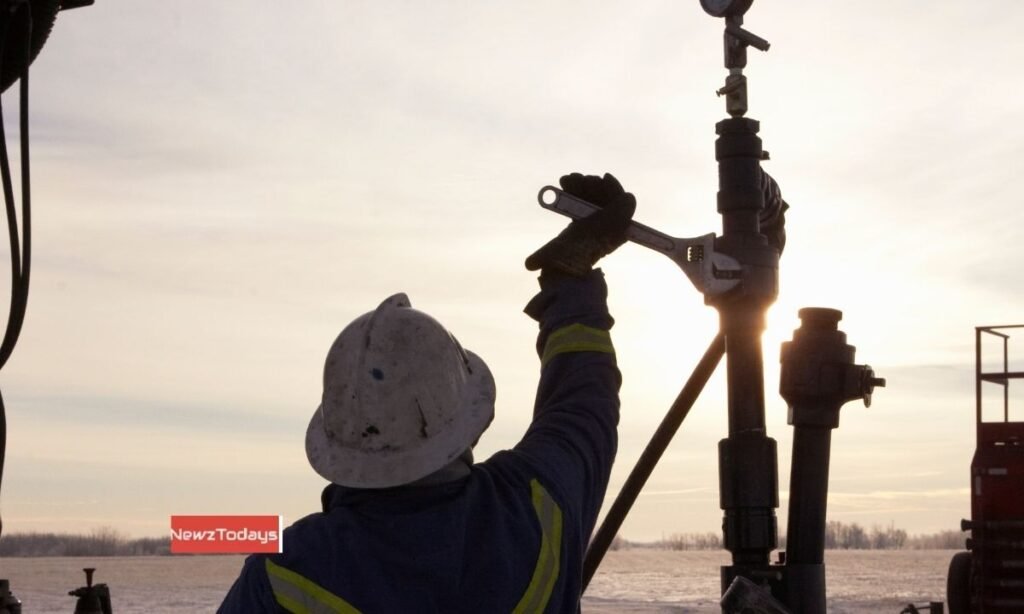
Pakistan’s oil and gas production declined last week, with oil down 3% and gas 4.4%, as major fields including Nashpa and Qadirpur reported sharp drops, according to Arif Habib Limited.
Pakistan’s oil production fell to 60,888 barrels per day in the week ended February 21, down 3% from 62,746 bopd a week earlier, data released by Arif Habib Limited showed. Gas output dropped 4.4% week-on-week to 2,688 mmcfd from 2,812 mmcfd, reflecting lower flows from key producing fields.OGDC Profit Falls 16% in 2QFY26
The decline was led by reduced output at major exploration and production companies. Oil and Gas Development Company Limited (OGDCL) produced 31,390 bopd, down 3.5% from the previous week. Pakistan Petroleum Limited (PPL) reported a 4.3% fall to 9,592 bopd. Pakistan Oilfields Limited (POL) saw output ease 1.2% to 3,931 bopd, while Mari Petroleum Company Limited posted a 1.7% dip to 1,199 bopd.
Gas production also weakened across large operators. OGDCL’s gas output fell 9.9% week-on-week to 533 mmcfd. Mari Petroleum produced 886 mmcfd, down 4.2%. POL’s gas volumes slipped 7.3% to 49 mmcfd. PPL was the only major to post a marginal 1.1% increase to 481 mmcfd.
Field-level data showed sharper volatility. Oil output at Nashpa declined 14.3% to 8,314 bopd. Maramzai dropped 55.1% to 280 bopd, while Marden Khel fell 32.8% to 639 bopd. In contrast, Makori East rose 8.1% to 5,395 bopd and Sharif increased 5.3% to 997 bopd.
On the gas side, Qadirpur recorded a steep 31.7% fall to 60 mmcfd. Shewa declined 33.4% to 34 mmcfd. Nashpa’s gas output decreased 28.1% to 57 mmcfd. However, Kandhkot increased 17.3% to 112 mmcfd and Makori East rose 7.2% to 53 mmcfd.
Pakistan relies heavily on domestic gas to fuel power generation and industry. According to the Pakistan Petroleum Information Service, the country’s average natural gas production has been on a declining trend in recent years due to mature fields and limited new discoveries. Official data show production has fallen from over 4,000 mmcfd a decade ago to below 3,000 mmcfd in recent periods.
The National Electric Power Regulatory Authority has repeatedly flagged lower indigenous gas supplies as a driver of higher reliance on imported liquefied natural gas. The Oil and Gas Regulatory Authority has also highlighted depletion at major fields such as Sui and Qadirpur in its latest reports.
Sector analysts say sustained declines in domestic output could widen Pakistan’s energy import bill, which already exerts pressure on foreign exchange reserves. The State Bank of Pakistan has previously cited energy imports as a key contributor to the current account deficit.
The government has announced policy measures to incentivize exploration, including revised wellhead gas pricing and tighter timelines for field development approvals. Industry participants expect new exploration blocks and enhanced recovery techniques to partially offset natural declines.
Weekly volatility is common due to maintenance shutdowns and technical adjustments. However, analysts note that the broader trajectory remains under pressure without major new discoveries.
Future production trends at OGDCL, PPL, POL and Mari Petroleum will remain critical for Pakistan’s energy balance, as reflected in ongoing weekly updates compiled by Arif Habib Limited.