
Qatar LNG diversion to boost local oil and gas output
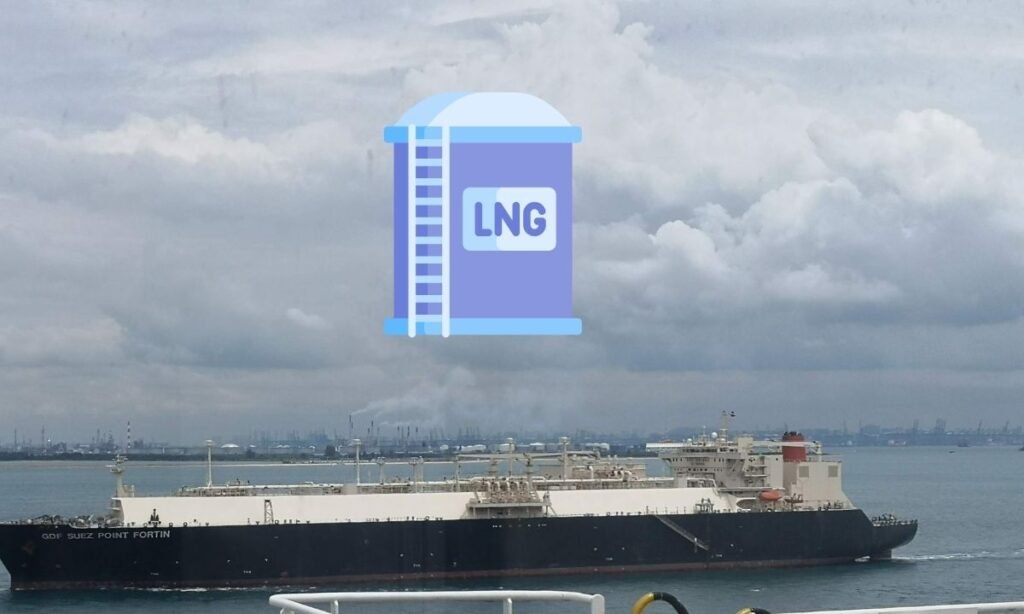
Pakistan’s plan to defer Qatar LNG cargoes is expected to lift local oil and gas production by up to 10%, easing curtailments and boosting earnings for exploration firms.
Pakistan’s decision to divert or defer LNG cargoes from Qatar is expected to provide a major boost to domestic oil and gas exploration companies, easing curtailments that have constrained production for more than a year. Officials estimate local upstream output could rise by as much as 8–10% once additional system space becomes available.
According to the Petroleum Division, Pakistan currently imports nine LNG cargoes each month from Qatar under two long-term supply contracts — one for 15 years covering five cargoes at a slope of 13.37% of Brent, and another for 10 years covering four cargoes at a slope of 10.20% of Brent. The government has now proposed deferring two to three cargoes per month, equivalent to 24–30 shipments annually, amid a persistent gas surplus.
Read More: Ogra reduces LNG prices by 20.5%
Pakistan’s total gas supply has averaged around 3,600 mmcfd in recent months, down from 4,000 mmcfd in FY24, with domestic output of about 2,792 mmcfd and LNG imports averaging 936 mmcfd. The drop in overall demand — estimated at nearly 400 mmcfd — is equivalent to four LNG cargoes per month, largely due to lower industrial activity, higher gas tariffs, and the imposition of the Rs791/mmbtu captive levy earlier this year.
Topline analysts say that this surplus has forced the Sui companies to curtail gas offtake from major producing fields, significantly reducing local output. Sui, Nashpa, Tal, Qadirpur and Mari — which together account for about 43% of indigenous gas production — have reported double-digit declines in output. The Sui field saw an 18% drop in FY25 to 231 mmcfd, while Nashpa and Tal each fell by nearly 30%, and Qadirpur by 33%.
The diversion of Qatar’s LNG cargoes is therefore expected to ease supply constraints and restore production levels across upstream operators such as Oil & Gas Development Company (OGDC), Pakistan Petroleum Limited (PPL), Mari Petroleum Company Limited (MARI), and Pakistan Oilfields Limited (POL). Industry analysts project earnings gains of Rs3.9 per share for OGDC, Rs3.46 for PPL, Rs5.88 for MARI, and Rs5.68 for POL.
Mari Petroleum stands to benefit the most from the freed-up system volumes. Its current HRL reservoir allocation to power generation is around 110 mmcfd, but curtailed supply reduced output by 2% to roughly 580 mmcfd in FY25. New discoveries at Ghazij, Shewa and Spinwam are now expected to absorb some of the freed capacity, potentially restoring growth momentum in FY26.
The Petroleum Division’s data shows that if two Qatar cargoes are sold in the international market, the resulting space could raise domestic gas production to nearly 3,000 mmcfd — recovering about 70% of the volumes curtailed in FY25. OGRA and PSO are still finalising the commercial framework with QatarEnergy, which will determine whether Pakistan bears any cost differentials between contracted and spot prices.
Spot LNG currently trades at around 17–18% of Brent, well above the average contracted slope of 11.96%, according to the World Bank’s commodity data. If Qatar resells deferred cargoes at higher prices, the country could avoid any losses. PSO, which manages Pakistan’s long-term LNG supply, is expected to absorb any potential differential before passing it on to gas consumers.
Pakistan’s gas market remains in structural flux, with consumption shifting sharply toward the national electricity grid and away from captive power generation. The government’s energy planners see the LNG diversion as a short-term measure to balance the grid and reduce storage pressures while helping local producers regain market share.
In the longer term, the diversion plan could strengthen upstream economics and reduce the import bill, but analysts warn that without investment in infrastructure and flexible contracts, Pakistan risks repeating the cycle of oversupply and underutilisation. The energy ministry has indicated that future LNG procurement will likely shift toward shorter-term deals aligned with demand forecasts.
Analysts expect that the planned deferrals will help restore natural gas output toward 3,000 mmcfd and stabilise domestic exploration activity. For the listed exploration and production companies — particularly OGDC, PPL, MARI, and POL — the move marks a rare opportunity to recover lost volumes and enhance profitability after a period of regulatory and pricing headwinds.
The Qatar LNG diversion, if executed as planned, may mark a turning point for Pakistan’s upstream sector, easing curtailments and improving earnings visibility while aligning the gas supply chain more closely with real demand.