GM Simulates 300,000 EV Battery Designs Before Production
General Motors (GM) has revolutionized electric vehicle (EV) battery development by virtually testing over 300,000 battery configurations before producing any physical cells. This extensive simulation approach, utilizing approximately 300 million computing hours—equivalent to roughly 34,000 years on a single computer—enabled GM to finalize a battery pack design in just one month.
Advancing Battery Technology with LMR Chemistry
The simulations primarily focused on a novel battery chemistry known as lithium manganese-rich (LMR). GM claims that LMR batteries offer 33% greater energy density than conventional lithium iron phosphate (LFP) batteries while maintaining comparable costs. Additionally, LMR cells incorporate 30-40% nickel, a significant reduction from the typical 85% nickel content in current high-nickel batteries.
Despite previous challenges with battery longevity associated with LMR chemistry, GM states it has addressed these issues, supporting the rollout of its upcoming fourth-generation EV platform. This platform is expected to deliver around 20% more driving range per kilowatt-hour than existing GM vehicles, alongside streamlined electric motors featuring 40% fewer parts, a 30% reduction in wiring, and a central computer with 40 times increased processing capacity.
Implications for U.S. EV Industry and Manufacturing
GM’s innovative simulation methods are also shortening the traditional development cycle—the company anticipates reducing what typically takes four to five years by half. For instance, air flow simulations that used to require 60 hours can now be completed in just a minute, while the assembly process in their PlantBrAIn factory has accelerated battery pack production by 30%. These virtual models even assist in optimizing factory layouts before construction.
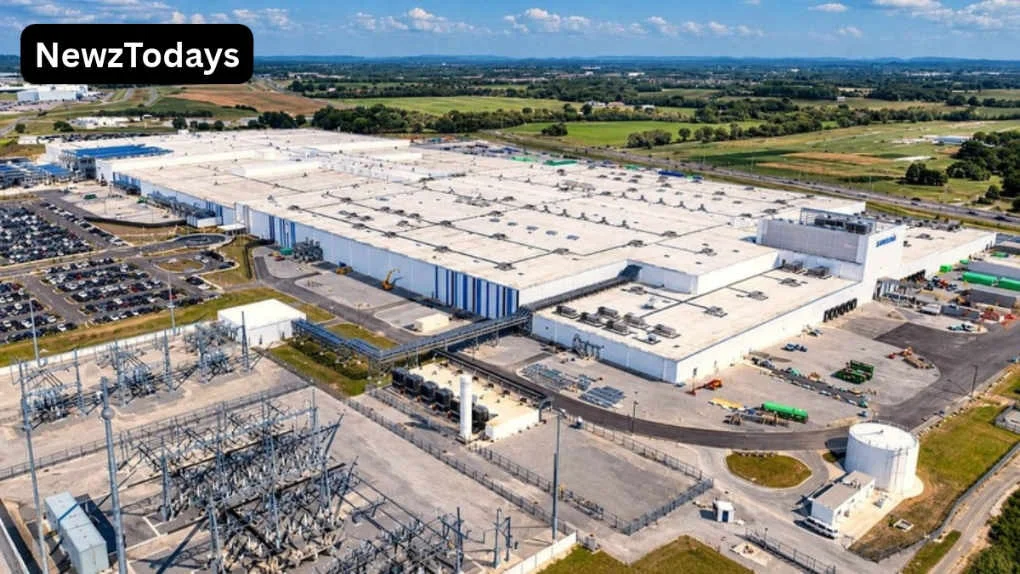
The LMR battery cells will be manufactured at the Ultium Cells plant in Spring Hill, Tennessee, a joint venture between GM and LG Energy Solution. Meanwhile, GM’s $900 million battery facility in Warren, Michigan, is slated to reach full operational status later this year, with mass production expected to commence in 2028.
GM Vice President of battery technology Kurt Kelty emphasized the company’s commitment to domestic innovation, stating, “We’re not licensing this from China.” With an investment exceeding $16 billion in U.S. research and manufacturing this year, GM aims to leverage artificial intelligence and advanced simulation to remain competitive internationally—particularly against Chinese automakers—by accelerating timelines and lowering costs.
Why This Matters for Pakistan
GM’s pioneering use of AI-driven battery design and manufacturing signals a transformative shift in automotive innovation that is reshaping the global EV landscape. For Pakistan, a nation keen on expanding its electric vehicle market and manufacturing base, GM’s advances highlight the importance of integrating digital technologies and investing in local research capabilities to compete globally.
As the electric vehicle industry grows rapidly worldwide, Pakistan’s stakeholders can draw lessons from GM’s model to enhance local production efficiencies, develop cost-effective battery technologies, and reduce dependence on imported automotive components. Incorporating such innovations could accelerate Pakistan’s ambition to improve green mobility, reduce fossil fuel reliance, and foster economic growth through technology-driven manufacturing sectors.