
Why Always Women? Honor Killing in Pakistan: A Legal and Humanitarian Crisis
Written By: Mehmoona Batool (Law Student)
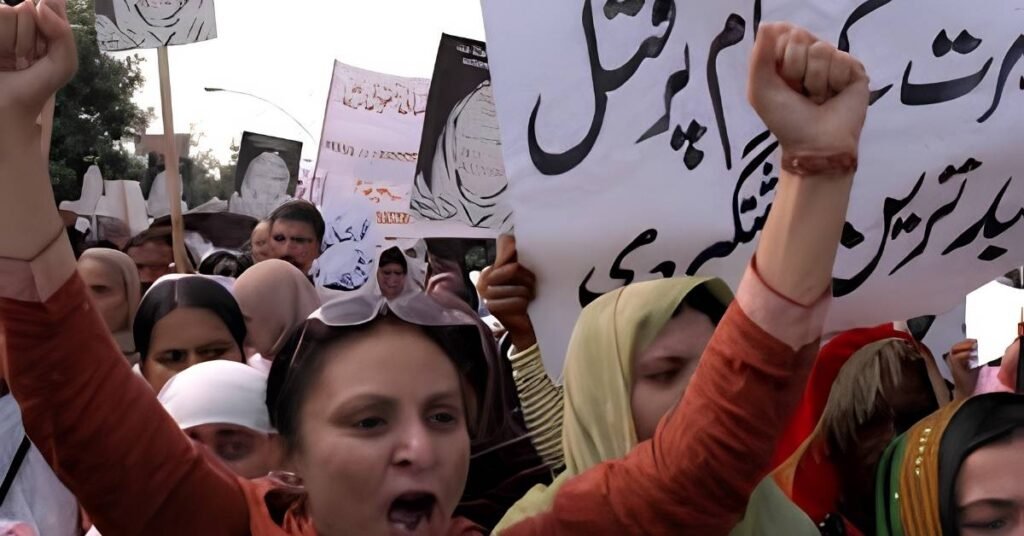
The honor killing in Pakistan has been serious legal and humanitarian crisis. This article examines the issue of honor killing in Pakistan as a serious legal and humanitarian crisis, with a particular focus on its disproportionate impact on women.
Using the recent case of Khalida Chandio as a starting point, the discussion highlights how informal justice systems such as jirgas continue to influence life-and-death decisions despite clear constitutional protections. The article analyzes the recurring pattern of such crimes across different regions, supported by statistical data, and explores the gap between legal provisions and their practical enforcement.
It further evaluates the issue through constitutional, societal, and international human rights perspectives, while addressing the misuse of cultural and religious justifications. Ultimately, the article argues that honor killing is not a matter of tradition but a violation of fundamental human rights, sustained by gender inequality and social acceptance. It calls for stronger enforcement of laws, societal reform, and a redefinition of honor to ensure the protection of life and dignity for all individuals.
Introduction
This article explores a deeply disturbing incident that reflects the harsh realities of so-called honor-based violence in society. It examines the killing of Khalida Chandio in Khairpur in April 2026, an act carried out after a jirga declared her marriage unacceptable.
Through this case, the discussion focuses on how such parallel systems of justice operate, why they continue to exist despite legal frameworks, and how they disproportionately target women. The article also raises critical questions about accountability, societal attitudes, and the urgent need for legal and cultural reform to prevent such tragedies from recurring.
Understanding the Concept of Honor Killing
Honor killing involves the intentional killing of a person, usually a woman, by family members who claim she has brought shame upon them. In Pakistan, such acts are connected to reasons that aren’t illegal, like choosing a partner, refusing a forced marriage, seeking a divorce, or even being suspected of inappropriate behavior. What is framed as honor is really a method of control, where a woman’s identity is diminished to that of a symbol of family reputation, rather than being seen as an individual with rights and dignity.
A Pattern That Keeps Repeating
Khalida Chandio’s killing fits into a troubling pattern that continues over time and across locations. In May 2026, a woman in Sanghar was labeled Kari. Around the same time in Rawalpindi, a young woman was killed simply for choosing her own partner.
In March 2026, a man in Sargodha killed his wife and five children. Earlier, in 2025, a couple in Balochistan was executed for marrying without family approval. Looking back even further, Kandeel Baloch was murdered in 2016, Samia Sarwar was killed in 1999, and the Kohistan case occurred in 2012. Each case leads to the same tragic end, making the issue profoundly alarming.
Statistical Reality: Numbers Behind Pain
Honor killings remain underreported, but available data reveals an alarming pattern across Pakistan:
Province Approx. %
Punjab 41%
Sindh 25%
KPK 24%
Balochistan 6%
Others 4%
These figures highlight the geographical spread and persistence of the issue. However, statistics alone fail to capture the depth of human suffering, as many incidents go unreported due to fear, social pressure, and private settlements.
Constitutional Protection and Legal Position
The Constitution of Pakistan guarantees the right to life, dignity, and equality. Honor killing is not a cultural exception; it is a criminal act treated as murder under the law. Legislative reforms, such as the Criminal Law Amendment Act 2016, aimed to prevent offenders from escaping punishment. Despite this, a gap remains between the law and its enforcement due to poor implementation, societal pressure, and the influence of informal justice systems.
International Legal Framework: A Standard That Demands Accountability
Beyond national law, honor killing violates international human rights obligations, including those set by the Universal Declaration of Human Rights and the Convention on the Elimination of All Forms of Discrimination Against Women (CEDAW). The United Nations Declaration on the Elimination of Violence Against Women identifies honor-based violence as a human rights violation.
A Question of Society and Gender Inequality
The idea of honor is applied unevenly, placing the burden solely on women. This double standard reflects an entrenched patriarchal structure that denies women autonomy and enforces inequality, making honor an issue of control rather than morals.
Islamic Perspective and Misuse of Culture
Islam grants women dignity and rights, including the right to consent and live without fear. The Quran states that taking one innocent life is equivalent to destroying all humanity, leaving no space for honor-based violence. The divide between religious teachings and cultural practices shows that honor killing is based on a distortion of faith.
The Real Meaning of Dishonor
Dishonor does not stem from a woman making choices about her life. It originates from taking a life, justifying violence, and remaining silent in the face of injustice. When society normalizes such acts, it shifts the burden of dishonor from the victim to itself.
Conclusion: The Question That Remains
Honor killing is visible, documented, and widely recognized, yet it persists. Until the question of why these killings are allowed to continue is answered through action rather than words, the cycle will not change.
Read More: Govt committed to empower women: Shaza